Gospel Hospitality

I was asked to give a short talk on gospel hospitality last weekend, as about 25 women from our church and community met to discuss the beginning of Rosaria Butterfield’s book, “The Gospel Comes with a Housekey.” I was asked to share a perspective on hospitality which might be different from Rosaria’s experience (or even her evangelistic emphases) – that of showing hospitality within the church family, and specifically mentioning the variety of “one another” directives we are given in Scripture. This was simply the first few minutes of what turned out to be a lively and vibrant discussion where women shared their own experiences of both giving and receiving hospitality, both within and without the Christian family; and we discussed a couple chapters of the book, in addition to clarifying some semantics. We didn’t necessarily agree with some of Rosaria’s definitions or see eye to eye with her on perspectives of prerequisites. But we all agreed that Rosaria’s heartfelt passion for the Gospel and for loving others is just contagious and captivating. I’m so grateful to be part of a local church, and to be building relationships now with people in my own community. And discussing hospitality, sharing with one another about ways we have or could experience this together, was such a blessing.

…..

1 Peter 4:8-10, “Above all, keep loving one another earnestly, since love covers a multitude of sins. Show hospitality to one another without grumbling. As each has received a gift, use it to serve one another, as good stewards of God’s varied grace.”

When Amber asked me to speak a little bit about the aspect of “one another” in the context of hospitality, this verse is what came to my mind. Here in 1 Peter, we are called to do a few different things for one another: to keep loving, to show hospitality, and to serve. These are ways we give our lives for the lives of those around us.

Interestingly, a few years ago at another church, I was asked to research (& then share) some things about “the one anothers” in Scripture. (I posted a prayer here that came from that study as well.) One of the main things I came away with from that short study was the simple reminder that I am called to give up myself for others, I am to imitate Christ my Lord in sacrifices big and small. The pastor who baptized me a couple decades ago uses the phrase, “my life for yours.” That is what Christ did for us, and it is what we as His people are called to do for the others around us. Romans 12:13 says that we are to “contribute to the needs of the saints and seek to show hospitality.” These are some of the marks of a true Christian: meeting needs and showing hospitality.

Hospitality, in its many and varied forms, is an active living-out of “my life for yours.” I will give of myself in order to give life to you. I will share my home to give you shelter, I will share my food to give you nourishment, I will share my belongings to ease your needs, I will share my shoulders to help bear your burdens, I will share my faith to bolster yours.

We have been shown the most sacred and awesome hospitality of all by being sinners saved by grace, for while we were yet sinners, God called us to become part of His family (Ephesians 2:5-8). He is preparing a home in heaven for us (John 14:2). And while we anticipate the blessing of the home He is preparing for us, Ephesians 2:10 says that we were “created in Christ Jesus for good works, which God prepared beforehand for us to walk in.”

At the same time, we need to be discerning and wise in how we share our homes and resources—in how we express godly hospitality—which is undoubtedly a good work prepared for us by our hospitable God. In the epistles of John, we read about false teachers and wolves in sheep’s clothing. In 2 John we read of the danger and warnings against opening one’s home to destroyers of the faith. There is a hospitality which is an act of charity, mercy, and compassion regardless of the spiritual state of the recipient (which is what Rosaria is emphasizing throughout The Gospel Comes with a Housekey), but we are called in Matthew 10:16 to be wise as serpents and innocent as doves. The exhortation for wisdom and innocence there is Jesus warning His people to be watchful for the enemy. So we must temper our merciful hospitality with much godly wisdom.
1 Corinthians 15:33 says that bad company corrupts good morals, which is generally understood to mean that it is incredibly difficult to withstand secular, godless company—this is why Paul encourages us strongly to put on the full armor of God. When we pursue hospitality to those outside the fold of Christ, we ought to be particularly well-armed, and we ought to shelter our especially vulnerable sheep (our children) well.

2 John 1:6-11, “And this is love, that we walk according to His commandments; this is the commandment, just as you have heard from the beginning, so that you should walk in it. For many deceivers have gone out into the world, those who do not confess the coming of Jesus Christ in the flesh. Such a one is the deceiver and the antichrist. Watch yourselves, so that you may not lose what we have worked for, but may win a full reward. Everyone who goes on ahead and does not abide in the teaching of Christ, does not have God. Whoever abides in the teaching has both the Father and the Son. If anyone comes to you and does not bring this teaching, do not receive him into your house or give him any greeting, for whoever greets him takes part in his wicked works.”

That’s kind of heavy stuff. And of course we use Scripture to interpret Scripture, and can not take this portion out of context. But I think it is prudent to point out here that God is urging us toward wisdom in regard to who we spend time with on the largescale, and who we greet and receive into our homes. Rosaria was brought to the Gospel through the hospitality of a couple—and it was in the context of intellectual banter and spiritual warfare. The people who welcomed her into their home and gave her a place at their table were prepared and equipped and armored. This is how we too ought to pursue hospitality toward the unsaved. Be hospitable, but do it after girding up your loins for battle.

But how about showing hospitality toward Christ’s flock? The people in your own church body, sitting in the front row, or down the pew from you. What about your pastor’s family? What about other people who serve in the worship service? What of giving your life (your home, your time, your table) for them? Romans 12:13 exhorts us to contribute to the needs of the saints, and show hospitality. Paul also says in Galatians 6:10 that we are to “do good to all men, but especially to those who are of the household of faith.” We ought to be particularly spurring one another on toward love and good works and hospitality within Christ’s family. Jesus Himself shows us by example in Matthew 12 that the people of God, “whoever does the will of My Father in heaven” are His brother and sister and mother.

I don’t think you can go away from Rosaria Butterfield’s book without feeling the weightiness and validity of her argument that sharing the gospel through hospitality is an incredible witness of grace and act of love. But if we don’t start closer to home, I think we do ourselves, our families, our church families, and our communities (including the unchurched and unsaved) a disservice.

My mom was taught the gift of familial hospitality through my grandma’s hospitality. Growing up, we had Sunday night family dinner—five generations of us—at my grandparents’ house every week. It was a glorious blessing. There were believers and unbelievers gathered around that table—every single one of us, sinners. Regular hospitality to multiple generations of family members (and the occasional friends that got brought along with us to the table) was exemplified, and my mom and I both learned from that example. My grandma hospitably welcomed her parents and her grandma to live with them. My mom later hospitably welcomed her grandfather, and later her inlaws to live with us. And when she was unable to have her own parents live closeby, she took hospitality one thousand miles distance, flying on a plane to visit them multiple times a year to love them, care for them, minister to them. My grandma still enjoys the harvest of fruit in my mom’s hospitality, and it is one of my mother’s main endeavors right now: to honor her mother, and a lot of it through various forms of loving hospitality. My mom learned something else from my other grandmother: she learned community hospitality from her mother-in-law, learning how to do things like host potlucks for their square dancing clubs and welcome large community groups into her home—like my dad, I’ve heard that my Grandmother Bennett “never knew a stranger.” She loved and welcomed everybody, and my mom learned community hospitality that way. My mom made home cooked meals for my dad’s entire staff luncheon every single Wednesday. That was a unique form of hospitality—she never made the same thing twice. And she blessed his staff so much through her food that she ended up making little cookbooks for them as gifts at Christmastime so they could then show culinary creativity as hospitality as well. She also threw amazing parties throughout my childhood for any random holiday or occasion you can imagine. But it was Sabbath meals, a midday dinner after Sunday morning worship service, where she would regularly gather twenty or more people around one table and serve a feast—it was that kind of church family hospitality that she really loves, and which I gratefully learned from her & now love to also pursue. Neither my mother nor my grandmothers had big block parties every summer or invited all the neighbors into their portico every Sunday afternoon like Rosaria writes about. But they all had unique talents given to them by God, and joyfully served the people God gave them through the sacrifice and service of hospitality.

I have the blessing now of having my own home, and I get to extend hospitality. And I am so grateful that I have the legacies of my mother and grandmothers to build upon. I love that we have a dedicated guest room so that our long-distance relatives always have a place to be welcomed whenever they want—and when they are not here, the bed is always made and the towels are always clean, because I want it to be a ready place of welcome if there is ever a need brought to my attention. It doesn’t happen very often, but it is there. And that is important—we are seeking how to be ready to show hospitality when the need arises.
I love to host extended family for Saturday evening Advent feasts throughout the month of December. I love to host church families for Sunday afternoon soup & bread throughout the month of December as well. We built our house with an open floor plan so we could fill it with guests, and laid ten thousand square feet of sod for a yard so we could welcome families to fill it up and play hard.

Someday, I might even be able to invite all the neighbors on my street to an ice cream social—I hope so. But right now, I am practicing my hospitality in ways a little closer to home. Especially while my children are young and vulnerable, I purposely keep our sphere small. I choose carefully what people come into my home and around my little ones. Their armor is on, but it isn’t as stalwart yet as it will become. My first ministry, and my most important hospitality, is shown to my closest neighbors—who happen to live right in my home.

So as someone who is living a very different life from Rosaria Butterfield’s story, but as someone who passionately embraces the theology & importance of hospitality like she does, I wanted to just share some brief ideas of how we can specifically bless one another in the household of faith.

When someone is ill, recovering from childbirth or illness or a procedure, drop off a meal. It doesn’t have to be fancy or complicated—it needs to nourish the body and the soul. This shows a welcoming love for one another.

When someone is rejoicing or grieving or needing a bit of encouragement, pick a bouquet of flowers (or grab a small bunch at the grocery store), and leave it on someone’s doorstep. This shows a welcoming love for one another.

When you are cooking something freezable—lasagna, enchiladas, chili, meatloaf—make an extra pan or two in disposable bakeware so you always have something on hand in the freezer to give away when a need arises. This shows a welcoming love for one another.

When you know it’s going to be over one hundred degrees for a week, and you have air conditioning or a creek or lakefront property or a really great set of sprinklers, invite people over to cool off. Put a package of OtterPops in the freezer so you can cool people off from the inside out. This shows a welcoming love for one another.

Take someone out for coffee. Treat a lonely friend to breakfast. Share a cup of tea with a widow. Invite a college student over for Thanksgiving. Deliver fresh bread and honey butter to the neighbors “just because.” Text a friend from Costco to see if she needs anything picked up while you’re already there. Have an open house lawn party—set up lawn games, roast some marshmallows, make a huge bowl of popcorn, and pour countless glasses of Country Time lemonade. These are all ways to show welcoming love for one another.

Sometimes hospitality looks different than we imagine it would. Or could. Or should. But we don’t all have the same gifts—we don’t have the same personalities, resources, skills, or even spheres of influence. But we are all called to contribute to the needs of the saints and to pursue hospitality. Ask the Lord to show you what needs are throbbing in the saints around you. Ask Him to help you pursue hospitality among the household of faith. Ask for His provision so that when you bring your small basket of loaves and fish, it would be His love which multiplies your offering so that all who gather around your table will be nourished and sent away full. With leftovers. Because He is that kind of God. And we ought to be that kind of people.

Throughout Scripture, we are called to LOVE one another, to SHOW KINDNESS to one another, to SPEAK THE TRUTH to one another, to HONOR one another, NOT TO WRONG one another, to BEAR THE BURDENS of one another, WEEP with one another, ENCOURAGE one another, EXHORT one another, GREET one another, HAVE FELLOWSHIP with one another, WAIT for one another, BE AT PEACE with one another, SING to one another, USE GIFTS for one another, SERVE one another, CONFESS SINS to one another, FORGIVE one another, PRAY FOR/WITH one another, and WELCOME one another with hospitality.

So as we continue our discussion and see how Rosaria uses her own giftings and resources to share the gospel with people in a welcoming way, let us not forget to start where we are—to treat one another with welcome and hospitality in creative, generous, joyful ways. Starting with the people in your own home, then your own church, and then beyond that to your community. 1 Peter 4:9-11 says, “Show hospitality to one another without grumbling. As each has received a gift, use it to serve one another, as stewards of God’s varied grace… in order that in everything God may be glorified through Jesus Christ. To Him belong glory and dominion forever and ever. Amen.”
Paideia Studies Books

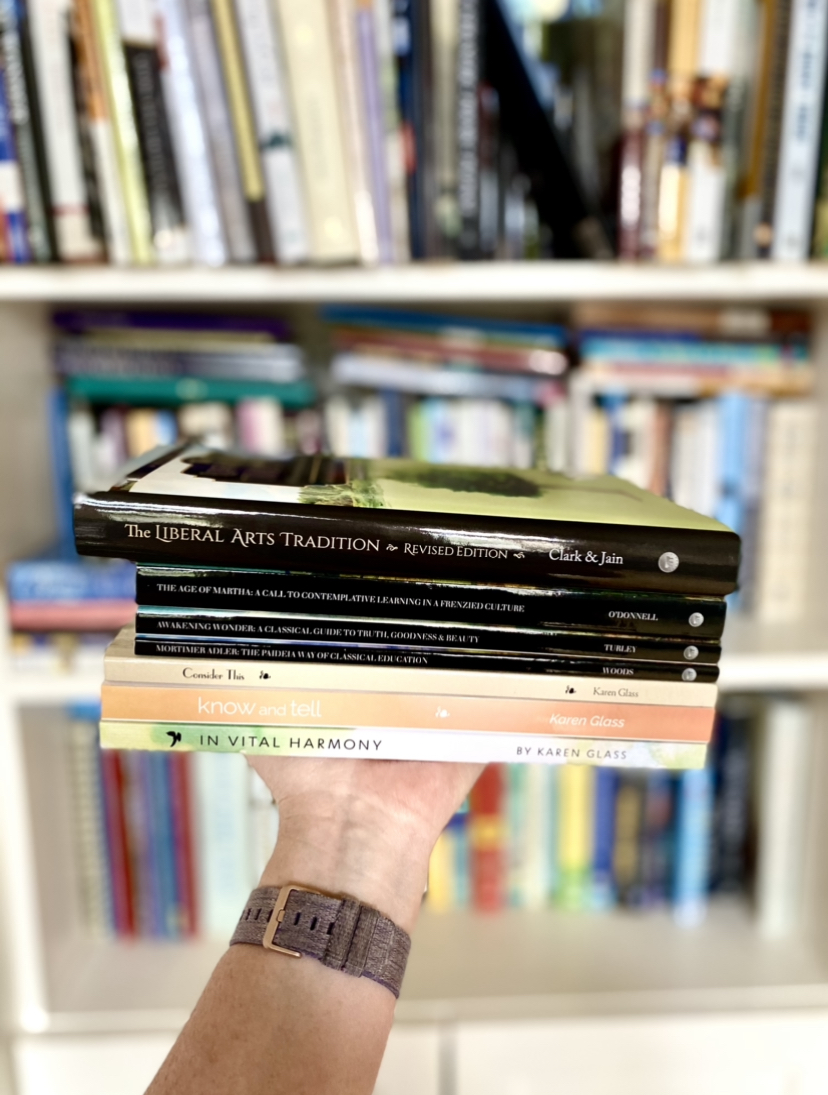
As I continue reading about Classical education, specifically capitalizing on the Christian nuances of it, and prepare to direct a cooperative of families in this endeavor, I want to say a few things about books & curriculum. If you have been around me, my home, my conferences, or my writing for any length of time you will know at least one thing about me: I love books. Bibliophile ought to have been my middle name. But Joy also works, because I get more joy out of books than you can probably imagine. Buying them, holding them, smelling them, flipping through them, reading them to myself, reading them to my children, reading them alongside others, discussing them, writing in them, book darting them, assessing them, organizing them, gifting them, lending them, borrowing them, recommending them… the list goes on and on… but it’s all about books. Seriously. I have an addiction. (There are way worse things to which I could be addicted, so I’m unabashed and unashamed.)

But one thing about homeschooling is that it feeds this book addiction. I suppose you can homeschool without being a bibliophile, but why?! Through my years of home education (being a second generation in this realm, I have thirty-two years of this going for me at this point… or maybe thirty-seven…), my love of books has grown exponentially. So has my need for more bookshelves. And as I have grown in my pursuit of Classical education specifically, my needs (not just my desires) for more books has become more pronounced.

If you can imagine this being even more emphasized, just imagine now that I have been put in the position of starting and directing a Classical Christian homeschool co op. Yep! Loads of more books. In fact, the kids probably have begun to equate the mailman with a librarian… because more often than not, at least one book arrives on the doorstep a day.

I mean, hey: I already admitted that I have an addiction.
Addictions can be healthy. (Right?)

Back to books.

I love to jog along the line of Charlotte Mason meets Classical education. When I first read “Consider This” by Karen Glass, I think I actually cried, legitimately dimpling the pages of that library book with more happy tears than book darts (and trust me, there were plenty of book darts). I was not raised to check off boxes or fit into boxes. I was honestly raised to move mountains, ask questions, push the envelope, rest deeply, and create culture rather than fit into one. We never liked labels. I still don’t like labels. (Don’t believe me? Ask my husband. Or my pediatrician.)

So when it comes to curriculum, I have never really loved answering the question that most often peppers me as a homeschooling mama: “so, what curriculum do you use?” It makes me stutter and stumble almost as obviously as when someone would ask me as a homeschooled kid, “so, what grade are you in?”

I don’t exactly use a curriculum. I mean, I do. But I pick and choose. I like to think of our educational feast as a buffet, and we eat what is needed and loved at the time. We have always done Saxon math… but honestly, only because that’s what my parents used for my brother & me, and it worked for us… and thus far, it has worked for each of our kids as well (we are only up to Algebra 1). We have enjoyed Rod & Staff for grammar, Our Mother Tongue, and even Dragon Grammar. We have enjoyed IEW as well as Writing & Rhetoric. I love weaving together Story of the World with A Child’s History of the World and Mystery of History. Mapping the World with Art is my absolute favorite geography curriculum at this point. And we have used a few different Latin resources from Classical Academic Press. We buy things from Veritas Press, Memoria Press, and Logos at Canon Press as well. (But let’s be honest: I buy as much as I can from used vendors on Amazon, Thriftbooks, Abebooks, or Exodus Books.)

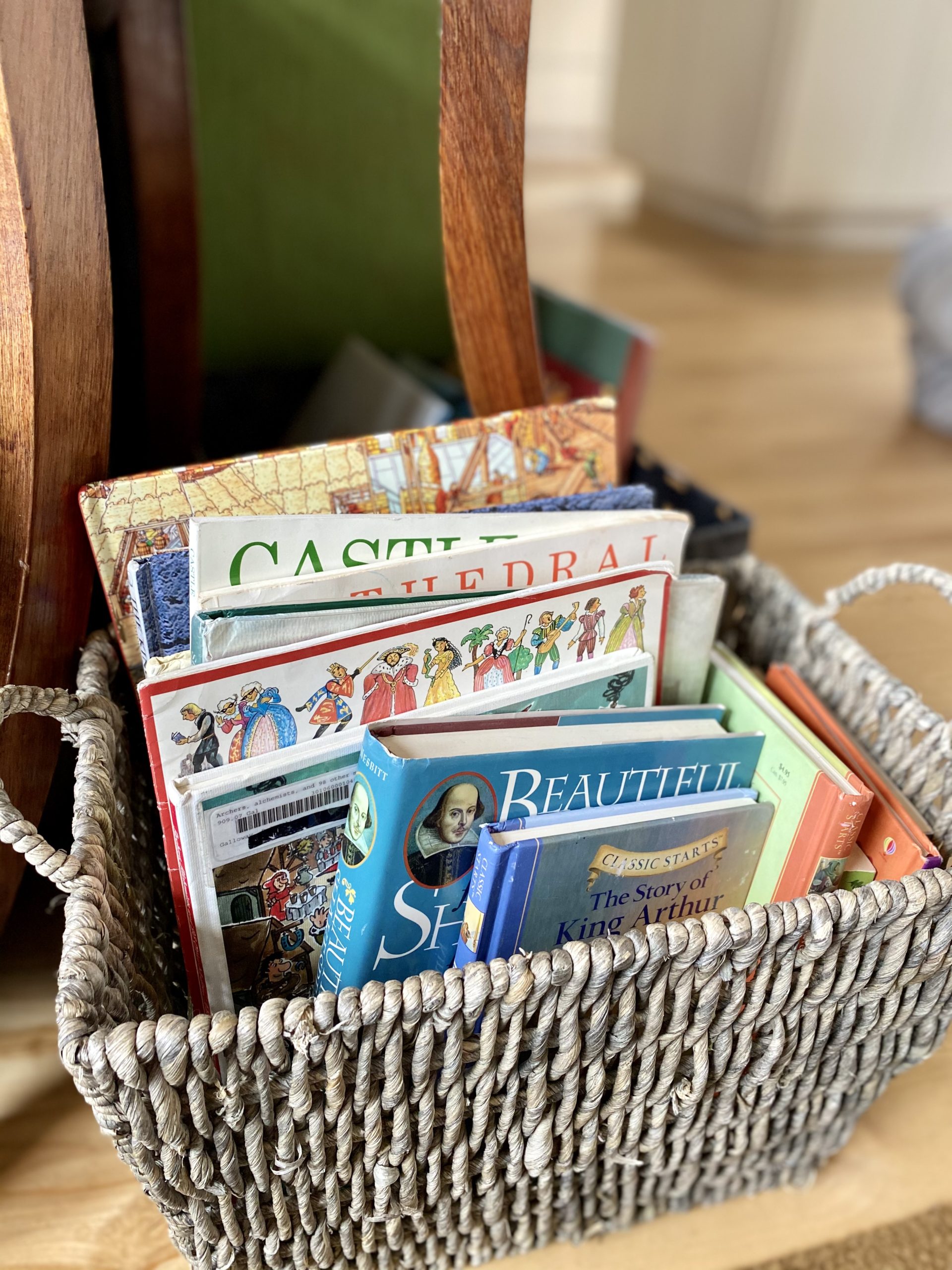
I constantly have over one hundred books checked out from the library (four family members have cards, and each has a 50-book allowance at a time), most along themes of what we are currently studying or pursuing as a family or in our homeschool co op. And the living books emphases from the Charlotte Mason world? Oh yes please. All of those are speaking my love language! I love to pull things from Ambleside Online. I also use Redeemed Reader to help us wade through a lot of things that are newer (I used to use a lot of Read Aloud Revival as well, but my kids & I have sort of grown past that and find Redeemed Reader and Scholé Sisters to be a better niche for us at this point).

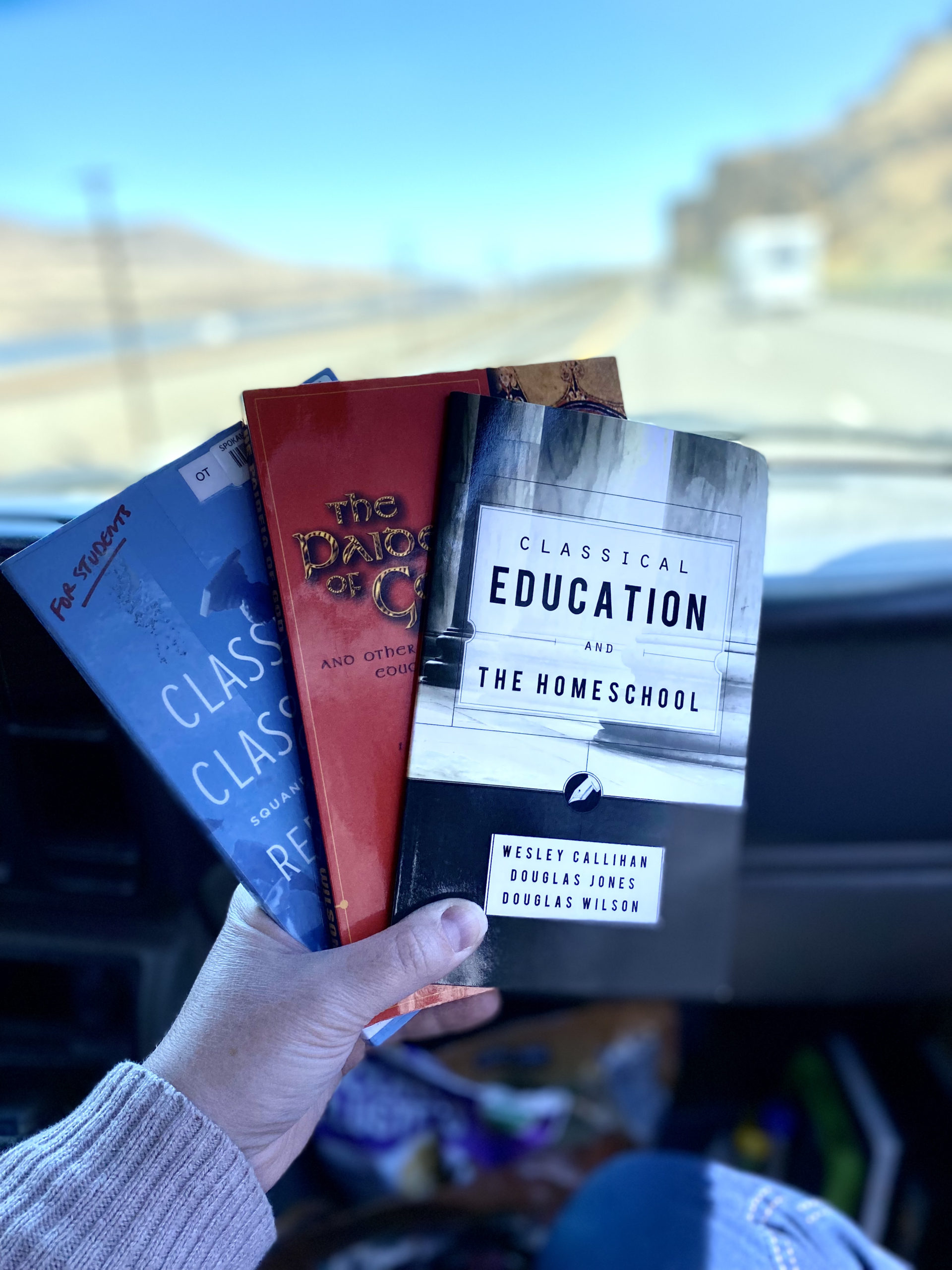
But when it comes to a homeschool co op, we do need to have things chosen ahead of time, and a trajectory to share with the group so that all the families are quite literally on the same page.I have had some people asking about the curriculum that Paideia Studies will be using, so I thought I would just share a bit of that here. Not all of this is set in stone yet, but this is the current plan and trajectory of ’21-’22. Seeing it all written out and hyperlinked helps orient you to the vision as well as the specific curriculum, I think. I’m encouraging all co op moms/parents to read the first essay in a previously mentioned book called The Paideia of God, which you can read online right here.I am also encouraging all co op moms/parents to pick up this short book, Classical Education and the Homeschool… it is a great resource for getting a little jumpstart on this whole idea. Paideia for the parents is important too! Parents need to model continuing education and love of learning, in order to best teach and encourage our kids toward knowledge, instruction, and wisdom.

So without further ado, this is in the plan for ’21-’22:

SCIENCE- Apologia General Science (textbook for older kids, but just following the modules in the table of contents each week for the younger kids, in more of a Charlotte Mason living books method)

LATIN- Songschool Latin (younger kids) or Latin for Children Primer A (older kids) as well as Root Words (Greek and Latin – curriculum not yet published)

HISTORY- Story of the World, Volume 2 – Middle Ages History (all ages)A Child’s History of the World (optional, but recommended)Mystery of History, Vol. 2 and 3 (optional, but recommended)

COLLECTIVE- We will also be doing singing, poetry, Bible/devotional, catechism (probably New City Catechism), and rotating through composer/poet/scientist/saint study in an all-together Collective each week for the first hour of co op.

ELECTIVE- And for the final hour of each co op day, we hope to have a rotating class that is more extra-curricular, possibly in eight week sections. We will figure that part out once we know for sure which families are joining us, how many kids will be in each class, and what the skills/interests are of all the attending parents. We will likely begin with art history & imitation.

I am eager to share more details of these class plans and book lists as time goes on. It is good for me to document these things, to have a self-motivated accountability on co op planning, and to share with other similarly-minded mamas so we can sharpen iron together.

Also, if you need to borrow a book… just let me know. I’ve recently turned my jokes from, “there’s an app for that,” to a more personally applicable, “I’ve got a book for that.”

See? Bibliophile. Unashamedly.

Paideia Studies

As we move forward into a summer of preparation for not only a new school year, but an entirely new co op, I thought it might be helpful to share some of the groundwork beneath and behind, as well as some of the curriculum and vision we pursue.

I first had to ask myself, why do I feel the need for a cooperative work with other families as part of my family’s homeschooling endeavors?
One, it is valuable for my children to learn from other adults, and a co-op is a simple way to implement that into our home education.
Two, it is important that my children have friends regularly in their lives, and a co op is an obvious way to make that a regular habit. It teaches them to foster friendships, those both which come naturally and those which take more work.
Three, I need frequent accountability in the educating of my children. Both in being diligent to continue pressing onward and upward, as well as in teaching subjects that I might too easily overlook on my own at home.

Once I established personal reasons for our family’s desire, I wanted to capture the purpose of a cooperative work in a concise way. What would be the purpose of our co op?
To encourage one another to pursue excellence in the home education of our children for the glory of God, and to encourage the faith of each parent and child represented in the co op. We will endeavor to raise our children in the nurture and admonition of the Lord, for the furthering of His kingdom to His glory and His peoples’ good. Using a basic Classical approach of excellence, literature, historic subjects & habits, we can encourage the habit of lifelong learning.

And in order to create a communicable vision, I sought to identify principal emphases as well as Scriptures to reference:
Wonder–>Wisdom–>Worship
Excellence without elitism
Truth, goodness, and beauty
Servanthood (not business acumen)
Philippians 1:9-11
Titus 3
Ecclesiastes 7:12
Proverbs 4:13
Romans 12:2
Colossians 2:8
Proverbs 1:7
Proverbs 9:9
Proverbs 18:15
Ephesians 6:4

And then I named the endeavor. I first pondered a lot of different words: Caritas (charity), New Covenant, Ordo Amoris (ordering of loves), Sapere (pursuing knowledge), Theopoline (God given), Theopolis (city of God), Theophilus (lover of God), and Paideia (all-encompassing enculturation).
Thanks to my parents, I have long been convinced that names matter. Titles and epithets matter. Words matter. And naming things is one way that we, image-bearers-of-God, imitate our Creator. When God created something new (Genesis 1:1-27, but even just verses 3-8 show the point), He called it something, in addition to speaking its purpose. We also see that some things (like the four rivers) have names, and Adam gave names to all the living creatures (Genesis 2:19-20) as God directed him. We also see throughout the entirety of Scripture that naming people and places and practices is hugely important. Words are efficacious.

So I named our cooperative effort Paideia Studies.
This matters. It is important. It means something.

If you to know a simplistic, succinct meaning of paideia, I would say that it means the all-encompassing enculturation of people, including instruction, discipline, nurture, education, and atmosphere.
If you are interested in a more deeply-pondered and parsed meaning, I commend to you this essay called “Paideia of God” by Douglas Wilson.

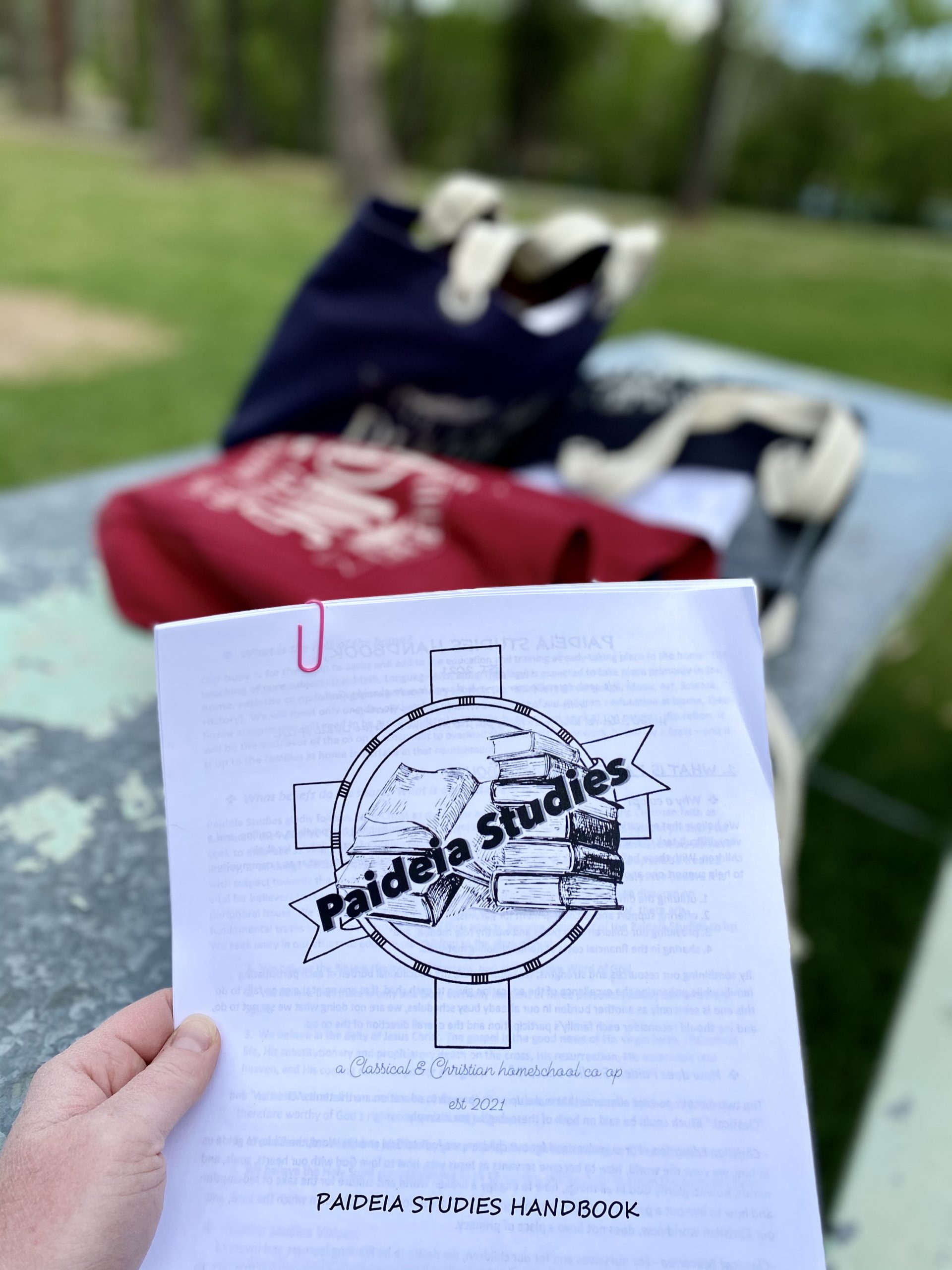
And while I do add the tag “co op” onto the tail of Paideia Studies from time to time, the official name is simply two words. We are not forming a business, a nonprofit organization, or anything resembling a school affiliate. We will be studying together: pursuing knowledge and wisdom and wonder and worship and truth in a weekly gathering led by parents (and grandparents or grown siblings, as the case may be). There is a steering committee, a board, a handbook… but these are for a blessing and aid of the group, not for some elite nod or financial kick. We are purposing to be the utter depiction of an old-fashioned cooperative where families of a like mind and single purpose are linking arms and burden-bearing together to bring their children up in the nurture and admonition of the Lord as we pursue knowledge and wisdom and truth, and provide our children with a feast of goodness and beauty and delight.

This last week, I had the pleasure of reading through three small books on Classical Christian education (The Paideia of God, Classical Education and the Homeschool, and Classical Me Classical Thee), and am currently reading another (Recovering the Lost Tools of Learning) while waiting for today’s bookmail to arrive so I can participate in a book discussion with long-distance friends of yet another (The Case for Classical Christian Education). It is good to bathe myself in these things, especially as I prepare to walk in the way the Lord is urging me: as the director of a small, local cooperative of families that will educate in a Classical, Christian model.

Cooperative. Classical. Christian. Education. Paideia.
Oh Lord, please equip us well to walk with our children, and alongside these other families, and show us Your grace in these things. Amen.

Ready or Not

It is often easier to do hard things when it is obvious that there is a need to be met. A few years ago, this is how I became a Christian moms’ conference director. And this year, this is how I am becoming a homeschool co op director.

There is a need. God is showing me that He wants me to meet it, and He will equip me to do the work if I seek Him faithfully. Ready or not, He has brought me new work! I am asking Him for the wisdom and grace to meet it.

Until just a couple of weeks ago, my family was happily digging deep into a Classical Christian homeschool co op about 45 minutes away. In fact, we only got to spend two years with this particular group, and they happened to be some of the oddest two years in educational pursuits I can think of (thank you, intersection of germs and government). We had been excited to help develop the high school program with this co op, as my oldest son was among the oldest (with one other student his age) and we have every intention (while being open to wherever the Lord leads year by year) of homeschooling our children through their teens. With the ever-changing scene (especially lately) with higher education, it is even hard to map out where our children want to go (and where we think it is wise) in order to plan the best trajectory for them to get there with their limited years of childhood. Childhood is such a short season. Oh, Lord have mercy on us and grant us Your wisdom.

So at the very end of April, with curriculum already partially purchased and plans already in the works for the next co op year, we were very surprised to have the rug pulled out from beneath our feet when a phone call came from a dear friend of mine, saying that not only would our co op not be meeting for the 2021-2022 school year, but it was looking probable that the 26-year-long run for this particular co op was over. We spent a weekend saddened, heavy, hurting, and burdened.

I don’t know whether I spent more time crying or praying that weekend. They were so entwined.

Very soon, though–within mere days–I felt a pressing that I have felt only a couple of times before. A pressing that God is pushing me into a new work. Not something I planned or pined for, but something He prepared for me. No more tears, just time to follow Him with a willing heart & eager hands.

Let me just say, I never wanted to start a co op. I did not plan to be on a steering committee. This was from way out in left field. Maybe right field. Which punted left. I don’t know. But suffice it to say: this was not on my radar whatsoever.

But God. (Those are my dad’s two favorite words in Scripture. And as an adult, I now see why… although as a kid, I remember just giggling and wondering why my dad was such a nerd.)

God pulled that rug out from beneath my feet, He pressed a burden into my heart, and put a new task into my hands. I whipped together a plan for a new co op: first writing out what my personal thoughts were regarding things, and then looking at Scripture for a basis, and gathering information from other co op groups… and I created a handbook for a theoretical cooperative right here in my own little country hometown.

Within three weeks, I had a plan, a place, and a group of people wanting to link arms with us. Obviously, this was not my doing. This was the Lord at work.

It is such a blessing to dig in deep when we know that we are not spinning our own wheels or our own webs. It is a gift when the Lord presents us with opportunities–even really difficult ones–and essentially kicks us right through open doors. Something I have told numerous people through the work of running the Paideia Northwest conferences is that I love closed doors just about as much as I love open doors. They are both beautiful answers to prayer. And I am finding that resonating now with our new co op venture as well. It is easier to do hard things when I see the need which must be met… but it is even easier still when I see that it is the Lord meeting the need through me. I am not in charge. I am His tool.

Ready or not, the Lord is at work, and I am His handmaiden. I am here to do His will, and trust He will gird me for the tasks set before me. I am not enough, but He is. I am not ready, but He has already accomplished what needs to be done. And it is good.

The Purpose of Daffodil

A righteous man regards the life of his animal… Proverbs 12:10

In the spring of 2006, my heavenly Father saw fit to plunge me into a season of grief and devastation, actual abandonment at the hand of one who had declared love, given me a ring as a token of promise, and led me to believe that he would stand with me for a lifetime of companionship for God’s glory. But after months of wedding planning (and life planning), a phone call was the means of rending. I don’t usually go into detail about that particular sidestory in my life without a specific purpose at hand, and today’s story requires that bit of information. The rending of my relationship with that fiancé meant not only the rending of an engagement, with all of its wedding-plans and life-plans, but the rending of my heart on a deeper level. I had already been through a long and heartbreaking story including abusive and manipulative “love” before this engagement, and this new abandonment left me reeling on an entirely different plane. The Lord had given, the Lord had taken away… blessed be His name.

I had no idea at the time how continually grateful I would eventually become for the gift of being abandoned just a handful of weeks before my anticipated wedding day. At the time, it was only devastation. I felt extremely alone.

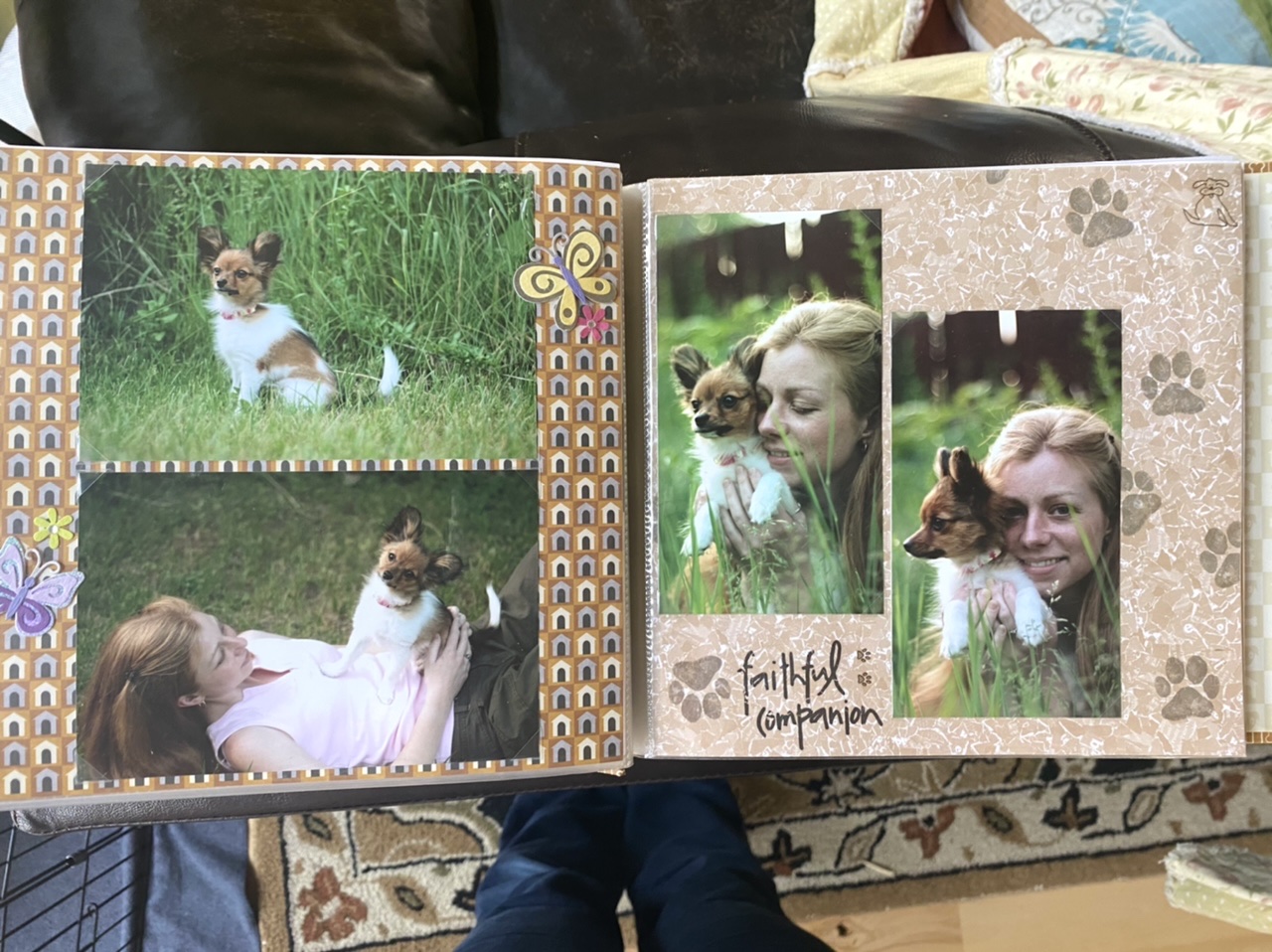
Perhaps my journey to Dilly was thanks to some friends of mine from college, one who was on his way to becoming a veterinarian, suggesting that I get a puppy for a balm… how silly, a puppy to take the place of the husband and future I had anticipated? Oh no: I learned that it was not silly at all. My vet-training friend even helped me identify the breed of my dreams: papillon. An intelligent breed as sweet as butterflies. Before long, I found a breeder with two available puppies. We met in a WalMart parking lot, and I found an immediate solace in the presence of this tiny creature who bonded with me in a mere moment. Not a question in my mind: this little companion would be a balm, a joy, a giver of unconditional love ~ until death do us part.

Daffodil. I named her Daffodil, because when my childhood dog Goldie was laid to rest after 13 years, my mama gave me some daffodils as a spot of cheer. It was homage to a previous companion. I knew I would call her Dilly.

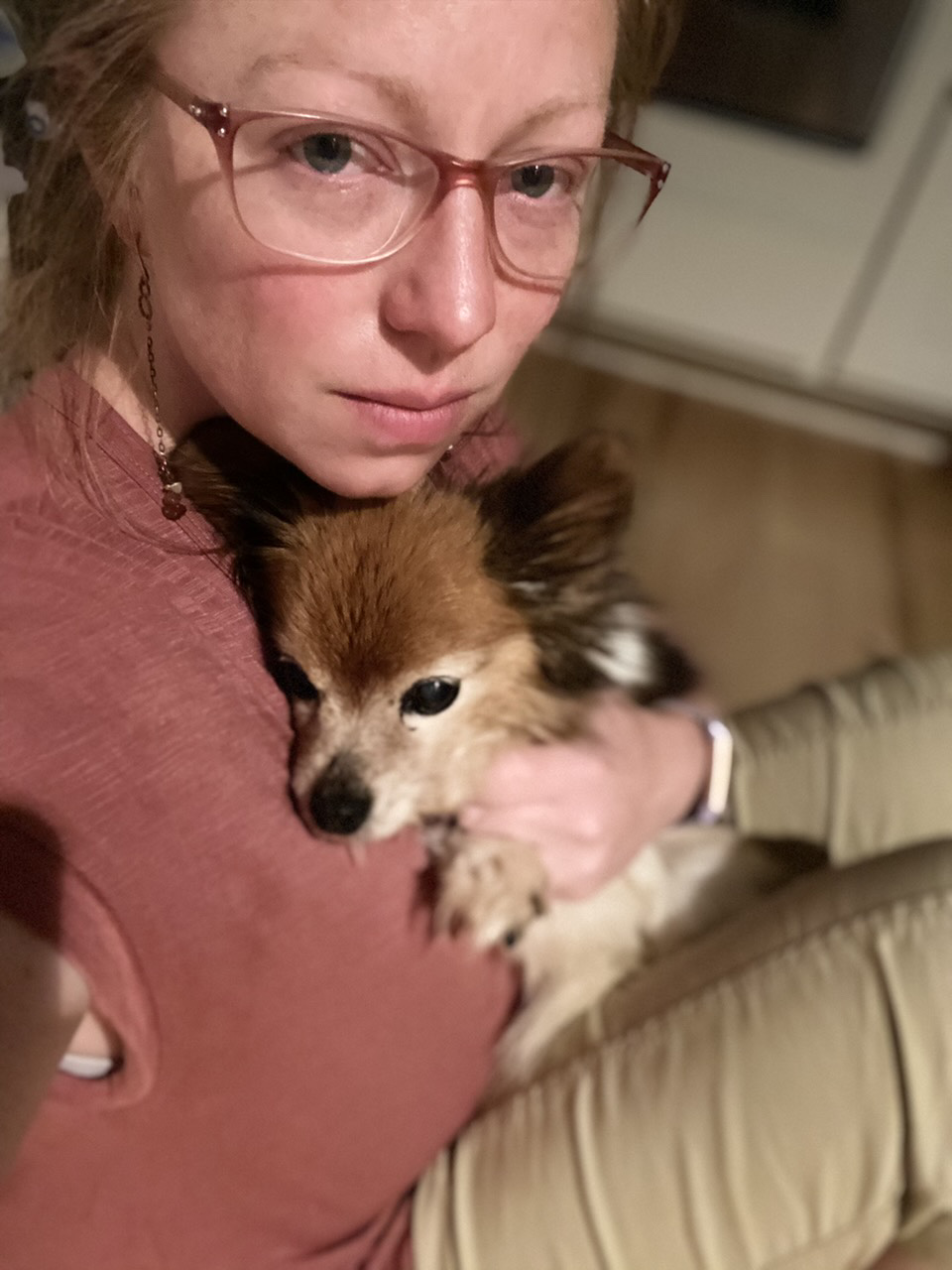
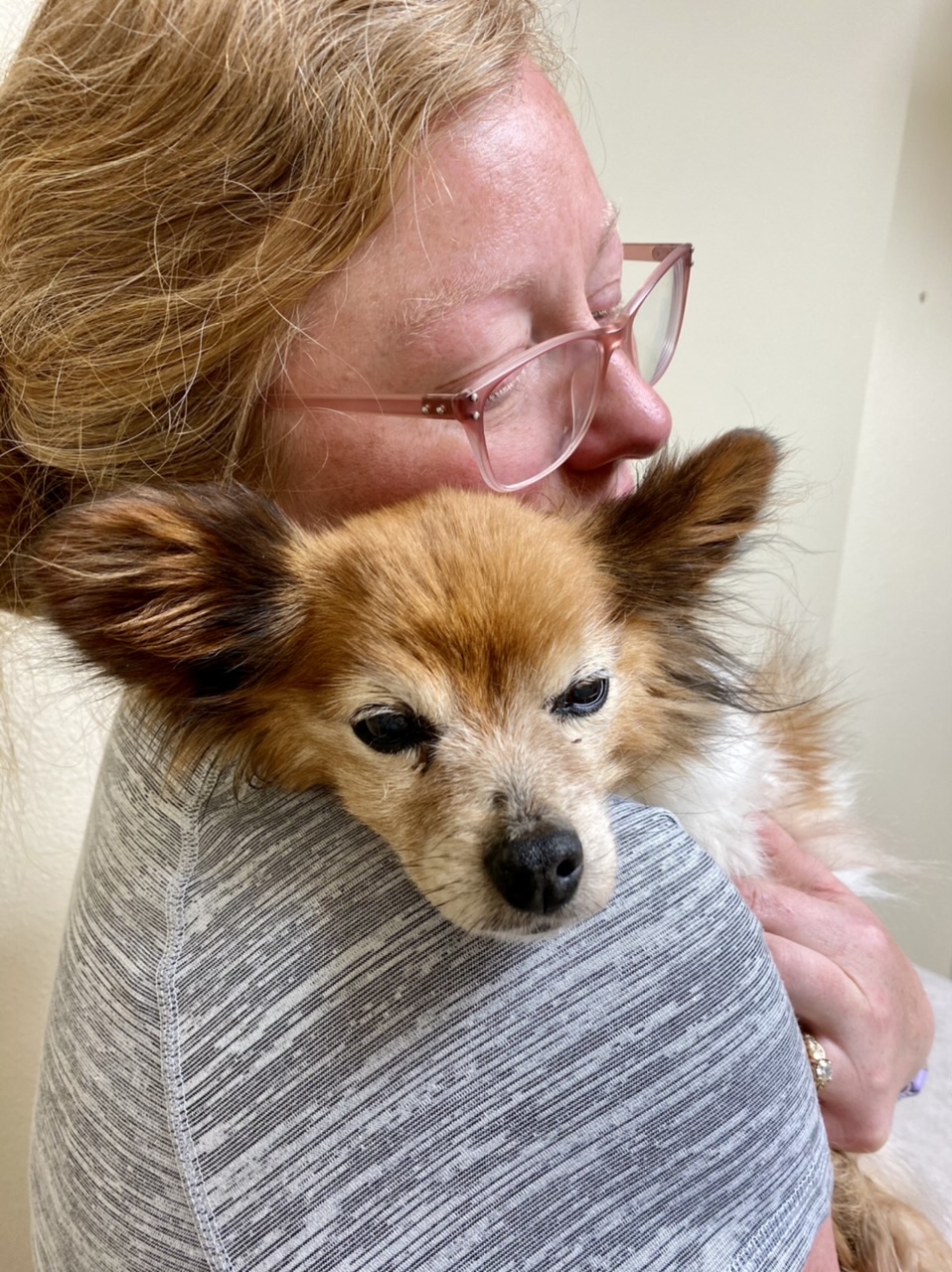
For over fifteen years, Dilly has been my companion: a breaker-of-bread-with-me. In fact, she has been the cleaner-up-of-my-crumbs! But as I now lay my little Dilly to rest and look back upon this sweet creature’s life, I see her purpose. The very reason for which God created her.

She was not some random accident upon which I stumbled in a WalMart parking lot when my heart was broken and my tears needed dried. God created her to be a balm for me. Realizing that, in those words, just this week is very humbling. Daffodil was made with the purpose of comforting me, used by my good heavenly Father to succor as a tangible grace in my times of need.

Dilly reminded my heart, as did my parents, that love can be unconditional and real. She was someone to snuggle at night while I slept, a new life on which I could focus during the days, an energetic ball of fluff and joy. She was the bridge which kept me from being swept downstream until the Lord brought Steven into my life. And her presence honestly kept me calm during the anxiety of my new engagement and wedding planning and college graduation just one year later.

And then I didn’t need her to share my bed, because God brought me my husband. So a portion of her purpose was fulfilled.

And then I was pregnant. And then my baby died. And while my husband was a comfort during the nights, it was my Dilly who was the comfort during the days. God had created Dilly to be that tangible grace when I again needed succored through devastation. And oh, she was delighted with the fat gift of Gabriel after another year! Puppy and baby together were lights in my life. Until the miscarriages began to pile up, and the cracks in my heart multiplied and deepened.

Dilly wouldn’t ask questions or put her foot in her mouth (except she was an actual dog, so she literally did), but was a quietly understanding presence when I sobbed my eyes out. With my husband away at work and a thousand emotions complicating my young motherhood of my toddler son, it was my little dog that God used in some very dire moments to be His grace to me. And so another portion of her purpose was fulfilled. Nine times more.

Sometimes a dog might simply be a watchdog to keep away the hawks and foxes from the chickens or the coyotes away from the lambs or the burglars away from the sleep-filled home. And Dilly often thought she was bigger than her actual britches, ready to take on a full grown Angus in our cow pasture. Tiny but terrible, sparks in her soul, she kept vigil; and I have been grateful. (Thank goodness her bark was reliable and never yappy. Even that was a gift.) But Daffodil was not meant to be just a watchdog or keeper of things or protector of creatures. She was meant to be my balm. And I raised her, honestly, along with my children (2 Samuel 12:3).

So now as I look back over the 15+ years God lent her to me, I praise His name for this gift. Before my home was filled with the pitter patter of little feet and the constant noise of children, He blessed me with the clicking of her nails on my wood floor and the jingling of a tiny bell against the name tag on her collar. Before my bed was filled with the body and warmth of my husband, God gave me a tiny pup to curl up with on lonely nights. Before my toddler knew how to dry my tears with his blankie as I bled out after yet another miscarriage, Dilly knew how to silently curl up in my lap and lick my cheeks as I sat curled up on the bathroom floor, oceans streaming down my face.

It has been a slow process of her purpose being fulfilled. A lifetime. Only very recently have I noticed at all that I honestly no longer need her comfort, her solace, her tender presence in the absence of other love. God has brought me a family. He has made me a mother. He has given me such purpose. My hands are blessedly full. The cracks in my heart have largely scarred over.

And so the purpose for which He created my Dilly has been fulfilled.
My heart is grateful. For the kindness of God in making this dog for me. For the ways she has blessed my heart and filled my life. For the joy she gave my children. For the energy she brought my home. For the clean kitchen floors. For the rinse cycle on my dinner plates.

The Lord gave, the Lord has taken away. Blessed be His name.
God has cared for Dilly (Luke 12:6), even as He used her to care for me.

Rest in peace, Daffodil May. The Lord has been good to us. Amen.

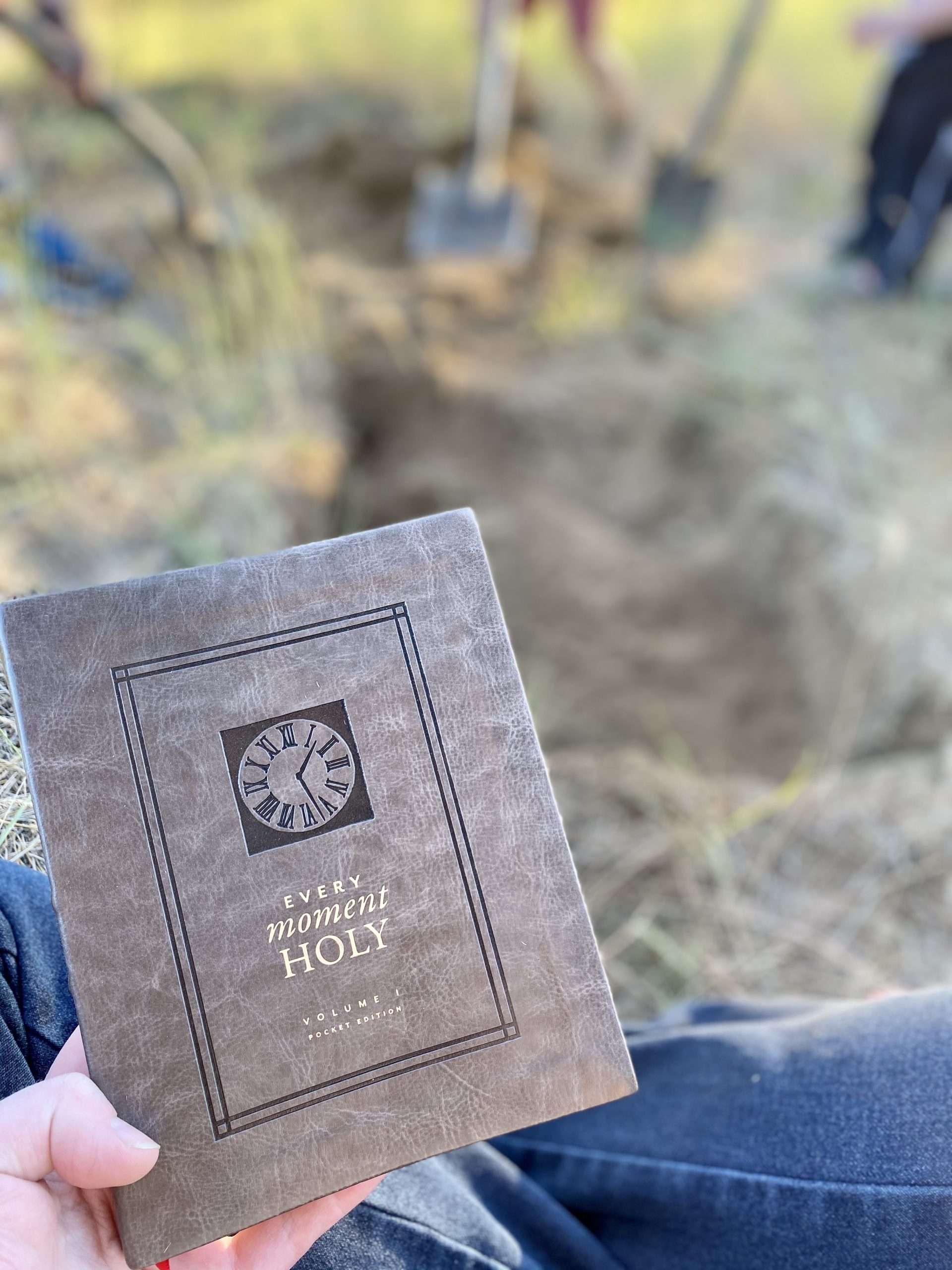
King of Creation, here was Your good creature. And here were the spaces and the days we shared, enjoying the glad company and cheerful fellowship of a fellow creature. We made room in our lives, room in our home, room in our hearts, to welcome Your unique creation. And we gave Your good creature the name Daffodil. We were filled with a right and fond affection for another living thing Your hands had made, delighting daily in her presence. We are grateful for the life that was, for the gift of a living thing so easily loved. You are merciful and loving, gentle and compassionate, caring tenderly for all that You have made. We know that the final working of Your redemption will be far-reaching, encompassing all things in heaven and on earth, so that no good thing will be lost forever, so that even our sorrow at the loss of this beloved creature will somehow, someday, be met and filled, and, in joy, made forever complete. Comfort us in this meantime, O Lord, for the ache of these days is real. Amen.
~Every Moment Holy, excerpts from A Liturgy for the Loss of a Living Thing~