Culture

If paideia is the entire enculturation
of a person or society,
then what is culture?
How do we begin, start, create,

cultivate a specific culture?
How do we then maintain, tend, keep,

and share an existing culture?

Paideia is the word handed down to us from ancient Greece, which means education or upbringing, the culture of a society—this was broadly understood to mean that this was the all-encompassing atmosphere and education necessary for the continuance of the Greek values and methodology. Particularly passionate Greeks wanted to produce similarly passionate Greeks in the following generations. Paideia was the word used to describe the way their culture and life and belief system and practices would be perpetuated. But in our modern American social elitism, I don’t know if we even understand culture anymore. We think it is simply what surrounds us, with its ever changing ebb and flow, dependent upon the whims of the society and their winds of change which always blow.

Culture is a word that has a noun form as well as a verb form, and both have an interesting nuance when it comes to raising the next generation in a specific paideia.
As a noun, culture means:

—the customs, arts, social institutions, and achievements of a particular nation, people, or other social group.

As a verb, culture means:

—maintaining conditions suitable for growth.

Interestingly, I find the definition of enculturation to be a sort of marriage between the noun and verb forms of culture:

—the process by which an individual learns the traditional content of a culture and assimilates its practices and values.

Enculturation and acculturation are two vastly different things. And I think one of the sad realities is that a lot of Christians in our nation have given way to acculturation rather than actively pursuing the enculturation of our children for the kingdom of God. Briefly put, acculturation is the amalgamation of multiple cultures, as opposed to enculturation which is the acquisition of one’s own primary culture.

For the Greeks, they wanted to raise good little Greeks, and they actively pursued a Greek paideia. They certainly didn’t want the influences of outsiders to overwhelm and overtake their children, thereby staining and ultimately derailing the next generation. When Paul used the term paideia in Ephesians 6:1, he used that word specifically because it would have been commonly understood and recognized by those who received his letter. He exhorted fathers to raise their children in the paideia of the Lord. He was promoting a culture centered on their heavenly citizenship over their national citizenship.

Philippians 3:20—But our citizenship is in heaven, and from it we await a Savior, the Lord Jesus Christ.

This is a principle which withstands time and supersedes location. The paideia of the Lord is a culture which transcends time and location!

What do you want your children raised for, educated for, brought up to love and pursue and perpetuate?

I for one long to raise my kids for Christ, to educate them well in order to equip them to glorify Him through their lives as His image-bearers, brought up to love things which are good and true and beautiful, to pursue the spreading of God’s kingdom on earth, and to perpetuate the line of Christ and practices of piety… in other words, I want to bring my children up in the paideia (nurture, admonition, education, culture, principles, instruction) of the Lord Jesus Christ.

I am hands-down, fully-in on that. Lord, grant me strength and shower me with mercy as I strive to accomplish this on Your power and grace!

A new nuance to contemplate, and that which has recently intrigued me, is the verb form of culture. “Conditions suitable for growth.”

I know a lot of people have been thrown into a lot of new things in the last couple of years, as though tossed into the water without the slow and careful teaching of swimming and floating methods. Things that I honestly have not been thrown into or had to develop myself, because I have honestly just always lived and swam in this water. In a recent discussion with a new friend (one of the founding members of Paideia Southeast, a new sister community for Paideia Northwest which I founded in 2018), I was reminded once again that learning something new and countercultural is harder to recreate than continuing to perpetuate something old and already culturally assimilated.

Two things a lot of people have been thrown into recently are sourdough baking and schooling at home. So I will use these as my primary examples here.

I was brought up on homemade bread. My children have been brought up on homemade bread. And one of the many types of bread I like to make is sourdough bread. In fact, I like to use my sourdough starter as a base for almost any kind of bread I make. I have a friend who really wanted to learn to use sourdough bread a couple years ago, so I gave her some of the sourdough starter from the container in my fridge, told her how I care for it and use it in baking, and wished her well. Again, about a year ago, she came back to me asking for starter and instructions… because it hadn’t worked well for her, she kind of forgot about maintaining it, and she’s not really sure what happened, but it definitely derailed and she tossed it. But with the craze of sourdough bread baking during the insanity which was 2020, she remembered that she once had an interest in this particular thing, and that she had access to someone who was already elbow-deep in the process. I haven’t asked her how it has been going over the last ten or twelve months, but I wonder if she has been more proactive and diligent and engaged in the sourdough process this time around. I wonder if she has been able to taste the wonder of the fruit of those labors.

I was also brought up on home education. And my children likewise have been brought up on home education. But I happen to know that there are plenty of cases over the last nineteen months where families have had their kids brought home to pursue their schooling out of forced necessity rather than choice—and while some have embraced it with skill and joy, others have found it to be a nightmare of overwhelm or dropped the ball from apathy or simply found it undesirable to have to sacrifice their days and hours and resources to educate kids themselves. This was not an ocean that I was pushed overboard into—it is a sea of blessing which I would gladly drown in, but prayerfully swim and float through by God’s grace. It is the same water (educating kids at home), but being shoved overboard into it is vastly different than searching for the water and wading in slowly from the shoreline… which, I would argue, is also vastly different than simply having already spent your whole life in that water (yep: I think I just labeled myself as a mermaid).

Two crazy metaphors which cannot overlap and seem unrelated if not opposed?
I don’t think so.
(…but humor me, and stay tuned for part two…)

Puddles of Glory

It rained last night. Real, wet, heavy drops. It thundered but no lightning struck nearby. The ground is still wet this morning. The bugs and birds are literally dancing with delight.

The heavens declare the glory of God and the firmament shows His handiwork.

We sing Psalm 19 for the month of August, and we seek to see how its every sentence is applicable for us in this current time and place. God gloriously, faithfully shows us His glory and His handiwork.

In the muddy puddles. In the bowing sunflowers. In the wriggling worms. In the clucking hens and crowing rooster. In the shadow-dappled grass. In the image-bearers making French toast in the other room. Let the words of my mouth and the meditation of my heart be acceptable in Your sight, O Lord, my Rock and my Redeemer.

lAUNCHING wORK

Today, I launch fully into another Paideia Northwest conference season with joy and weight – this is good work, it is big work, it is valuable and sweet. I am deeply humbled at the work God has put into my hands. I did not seek this, but I gratefully receive it. I have just opened registration for this year’s event, Rest. If you or anyone you know is interested, it’s best to get a jump on signing up. We sold out very quickly last year, and this year is shaping up to be similar. The details are occupying the corners of my brain space: luncheon details, decoration details, vendor details, volunteer details, printing details… Twelve weeks from tomorrow, we will be gathered in Post Falls – and I am here for it.

PSALM 128:1-2 “BLESSED IS EVERYONE WHO FEARS THE LORD, WHO WALKS IN HIS WAYS! YOU SHALL EAT THE FRUIT OF THE LABOR OF YOUR HANDS; YOU SHALL BE BLESSED, AND IT SHALL BE WELL WITH YOU.”

I find that I love organizing and creating lists and compiling details and pulling together lovely things. I have a penchant for pulling people together for common work and encouragement. Never before would I have thought that’s something I loved… but I do. Another evidence of this is found as I am also preparing to launch fully into directing the Paideia Studies co op. We begin meeting in just twenty days! I’m trying to finalize details for this work too. Printing off copies of the Collective plans for every family – thirty-one weeks of devotion, Bible memory work, poetry, loop studies, Medieval art study… I had so much fun compiling true, good, beautiful, pertinent, and worthy things for our year of education. My hope is that having it all laid out so far in advance will bless my future self, and serve the ten families in our group well. I pray that it is so! All of the details necessary for a co op director to have in order seem to be smoothly sailing at this point… again, I pray that it is so. I am grateful for the steering committee and board, and the prayer and conversational support the network provides for our co op. I am grateful for the mamas who are learning new methods for building upon familiar principles. I am grateful for the kids who are about to embark on new friendships, new studies, and new projects. I am grateful for the church where we are meeting each week this year – for their hospitality and generosity and kindness. I am grateful for the limitations we already face: limitations in space & size & scope & time. Limitations are a blessing for someone like me who can so easily be tempted to bite off too much at a time, or jump in too deeply before wading.

GALATIANS 6:9-10 “LET US NOT GROW WEARY OF DOING GOOD, FOR IN DUE SEASON WE WILL REAP, IF WE DO NOT GIVE UP. SO THEN, AS WE HAVE OPPORTUNITY, LET US DO GOOD TO EVERYONE, AND ESPECIALLY TO THOSE WHO ARE OF THE HOUSEHOLD OF FAITH.”

And so as Paideia Northwest and Paideia Studies (which nope, aren’t actually connected – one is a business I run, the other is an old fashioned cooperative I direct – and they just both bear that beautiful Greek term in their titles) are both preparing to launch their 2021 endeavors into the world, my hands are extremely full. And I am grateful to remember what paideia means. I am grateful to rest in the culture that has been passed to me. It is bubbling and vibrant, and I am eager to pass it along to others who want to pursue this culture for their families, their children, themselves, their souls.

ROMANS 12:10-11 “LOVE ONE ANOTHER WITH BROTHERLY AFFECTION. OUTDO ONE ANOTHER IN SHOWING HONOR. DO NOT BE SLOTHFUL IN ZEAL, BE FERVENT IN SPIRIT, SERVE THE LORD.”

The Lord is good. Blessed be His name.

Singing Psalms with Little Saints

Let the word of Christ dwell in you richly in all wisdom,
Teaching and admonishing one another
In psalms, and hymns, and spiritual songs,
Singing with grace in your hearts to the Lord.
Colossians 3:16
Long before I became a mother, I yearned to have children who sang. During my own years of home education in a Reformed Christian family, we grew our love of hymns into a love of Psalms—a love of melody into a love of harmony—a love of corporate singing on Sundays into a love of singing at home as a family all week long. I loved almost nothing more than monthly Psalm sings with our church family—and to this day, there is almost nothing which fills me with more delight than filling my home with the echoes of boisterous harmony. This love, instilled during my own childhood, was something I longed to continue cultivating as I moved on to college academics and beyond.

To read the rest of this article,
written by me for my friend
Amy Sloan to share,
head over to HumilityAndDoxology.com

Paideia Studies Book Stacks

As we continue our way through summertime, I am seeking to spend any marginal moments on education. I continue pursuing my own education through reading about Classical Christian education, Charlotte Mason education, and things to expand my knowledge & imagination.

Some things I have been reading lately:
Morning Time: a Liturgy of Love by Cindy Rollins
Ideas Freely Sown by Anne E. White
The Gospel Comes with a House Key by Rosaria Butterfield
The Case for Classical Christian Education by Douglas Wilson
The Paideia of God by Douglas Wilson
The Flow of the Psalms by O. Palmer Robertson
Teaching from Rest by Sarah Mackenzie
Mortimer Adler: The Paideia Way of Classical Education by Robert Woods
Classical Education and the Homeschool by Wilson, Callihan, and Jones

I have also been working on class schedules for our new Classical Christian co op, Paideia Studies. I have created the scope and sequence for Middle Ages History, General Science, and Collective for the upcoming school year. It feels so good to have those things ironed out and ready for the mamas.

I don’t personally have an official high school student this year, but this is what the high school bracket at Paideia Studies will be jumping into for our inaugural year:

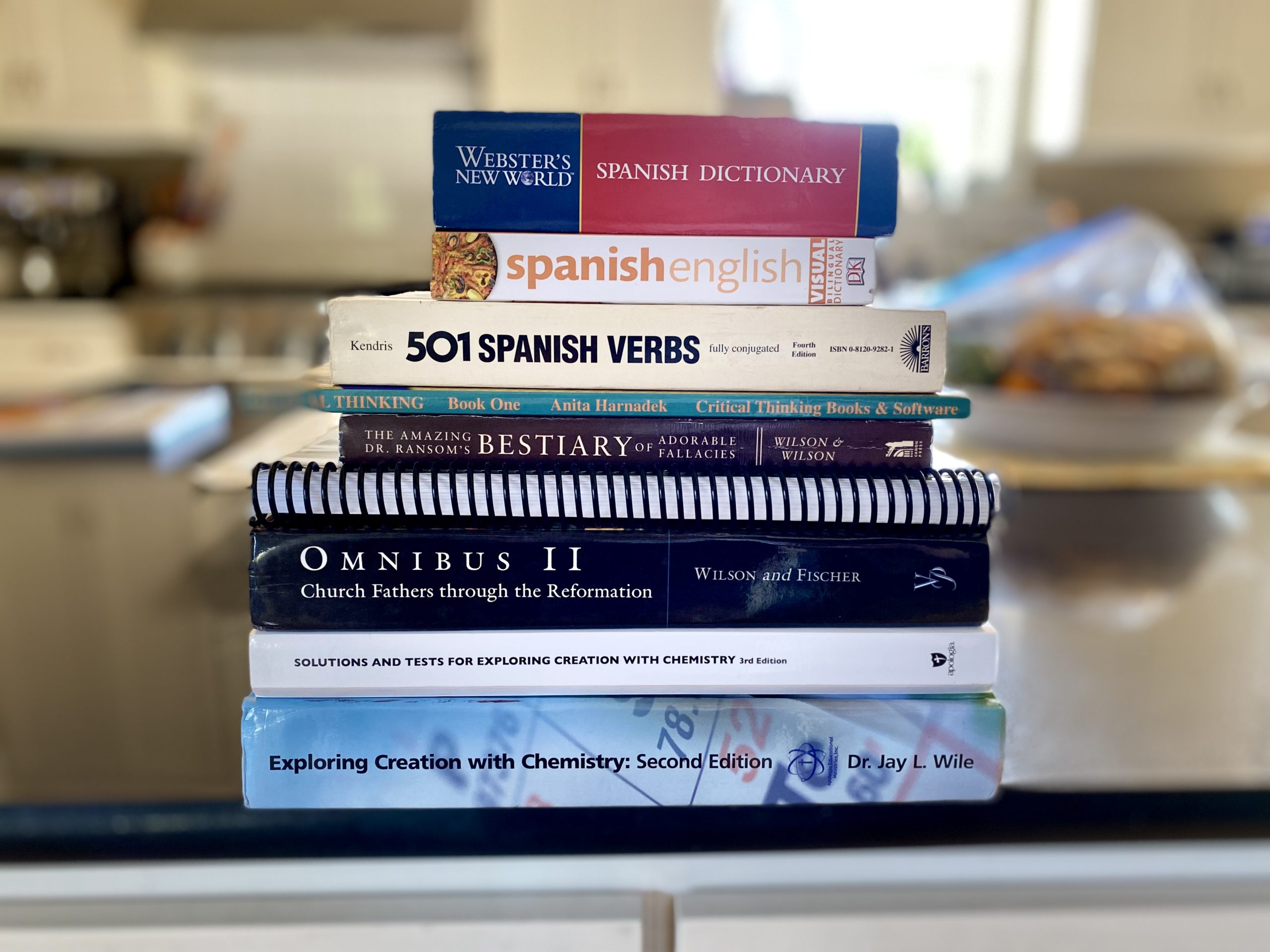
Science: Chemistry (Jay L. Wile)
Worldview/Lit/History/Writing: Omnibus II (Veritas Press) and Medieval History Based Writing (IEW), plus a long literature list
Language: conversational Spanish using Complete Spanish, 501 Spanish Verbs, and some dictionaries
Logic: Bestiary of Adorable Fallacies (Canon Press) and Critical Thinking (Anita Harnadek)

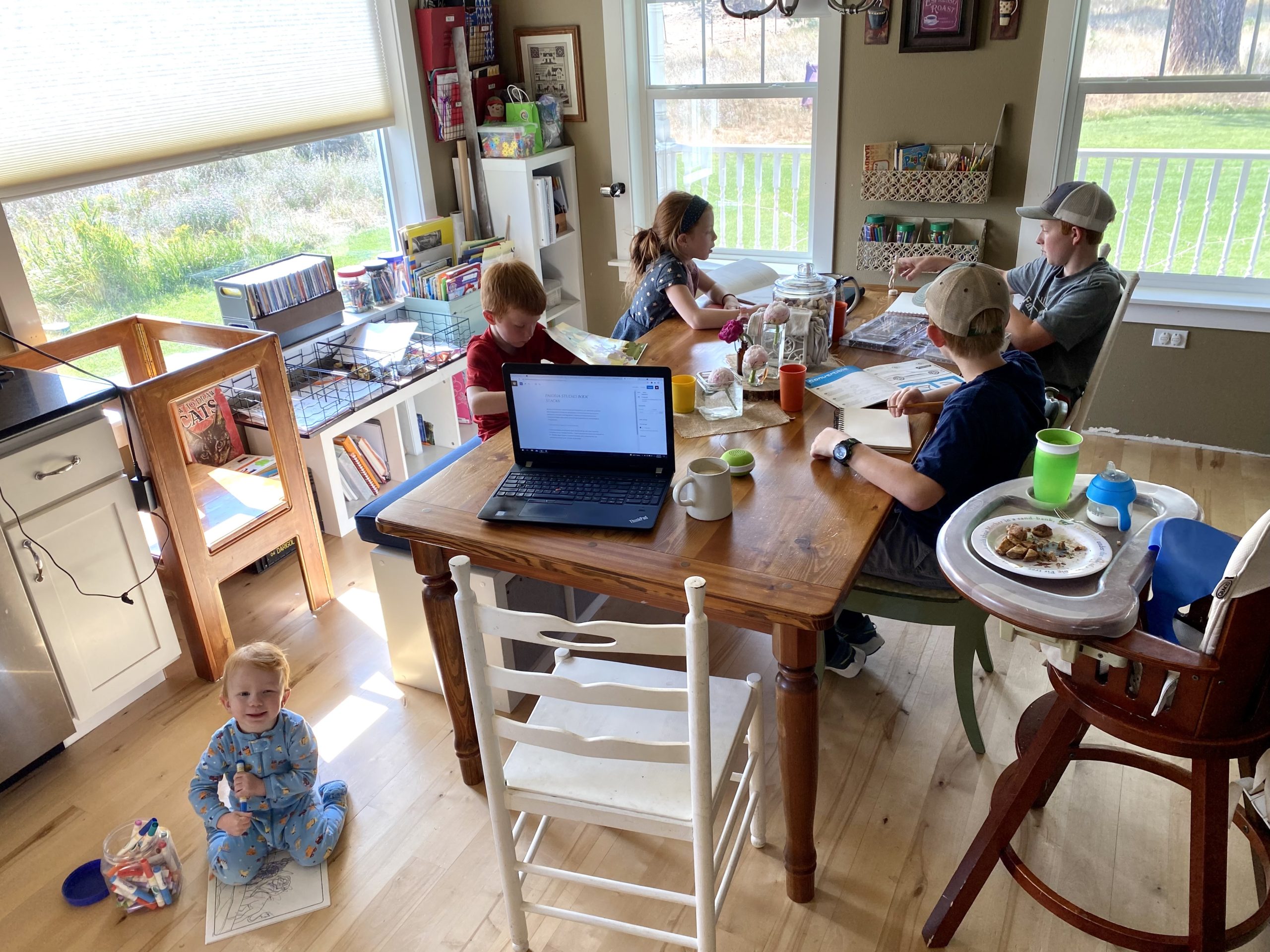
I do have kids in all the other class though! I have kids entering 1st, 4th, 6th, and 8th grades – plus a toddler for the youngest class. We are really looking forward to all the subjects and books and projects we will be pursuing with so many new friends this year. Here is a peek at the book stacks I have put together for the Grammar and Middle brackets at Paideia Studies this year:


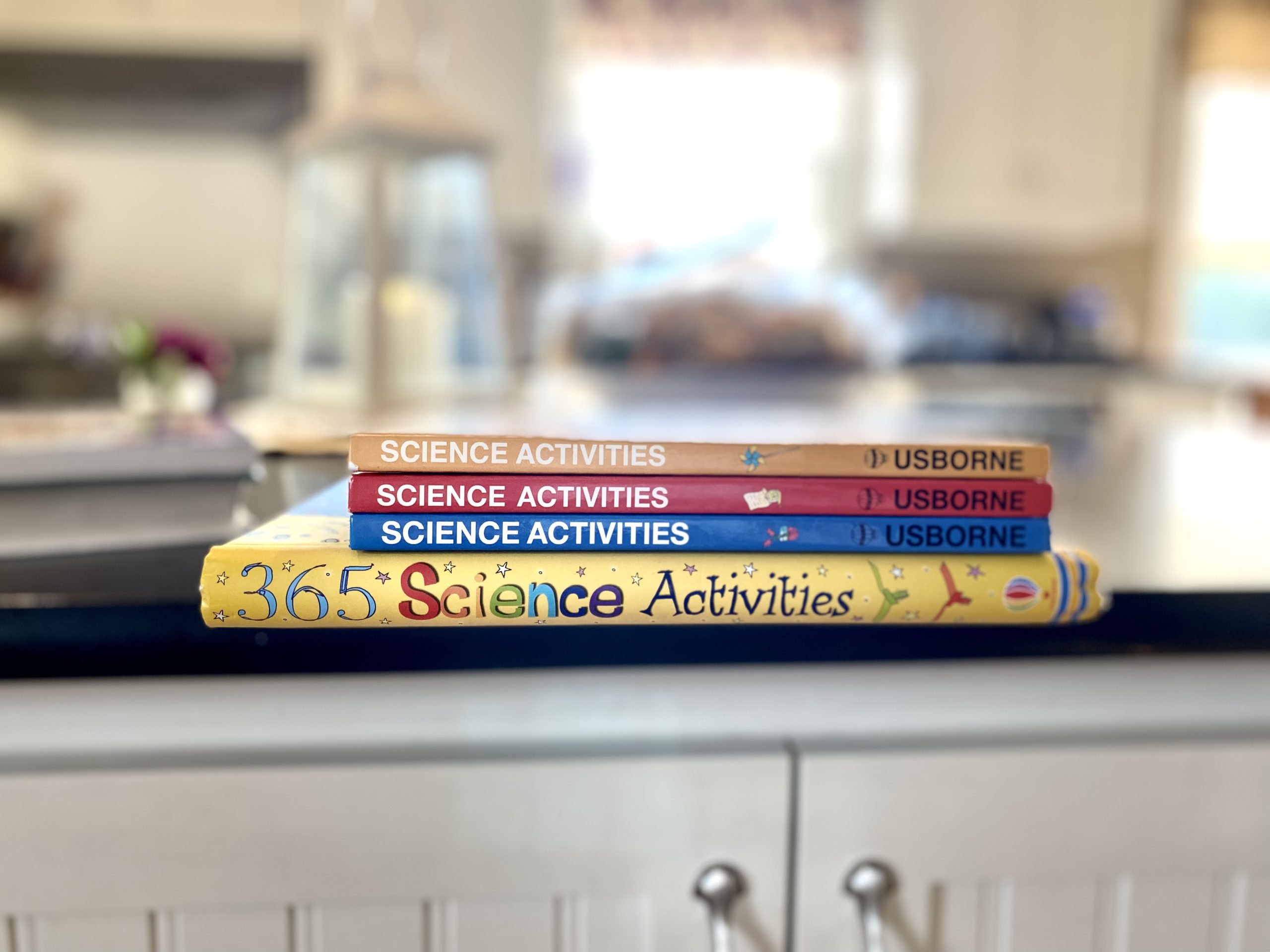
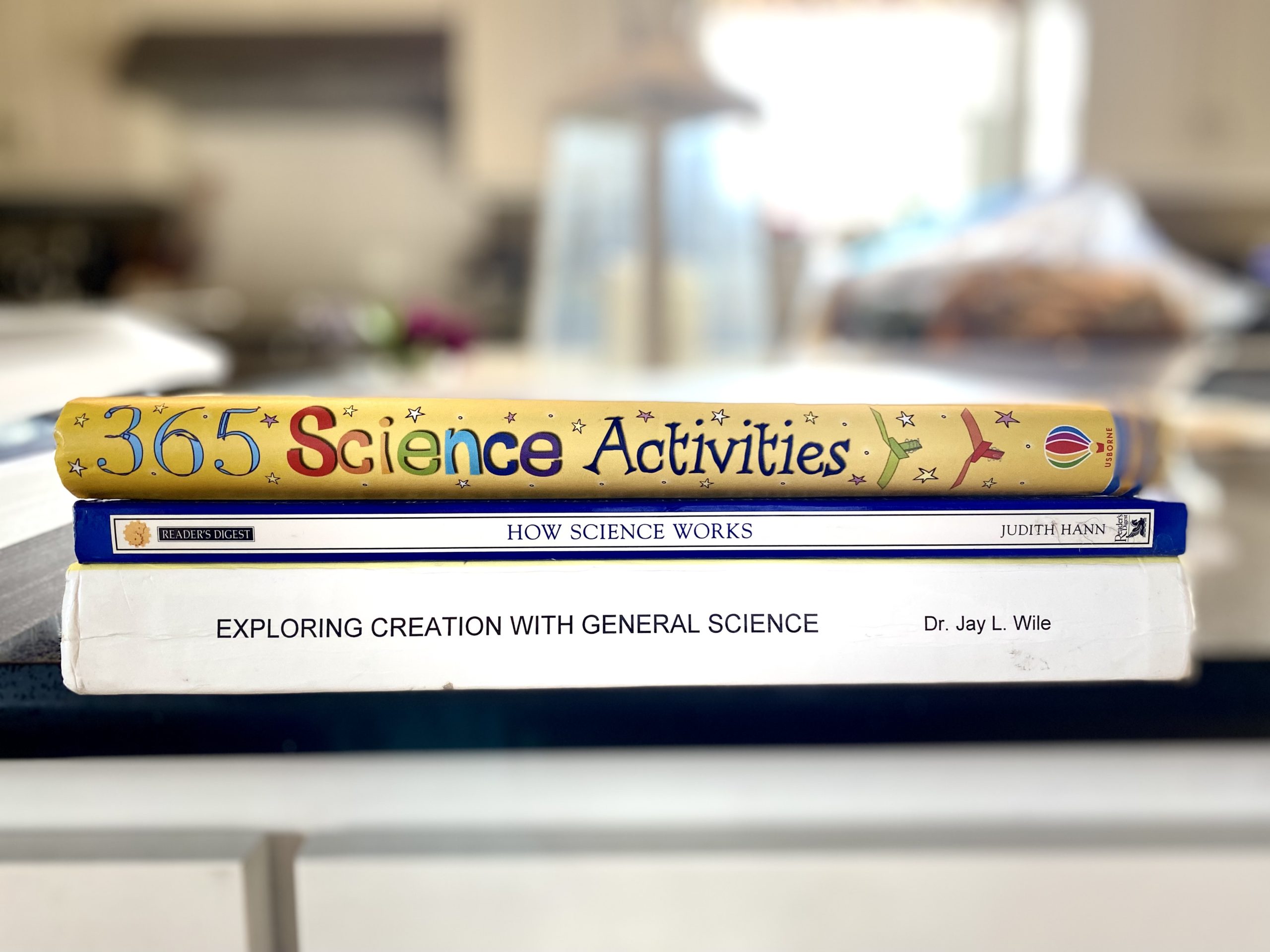
Science: General Science (Jay L. Wile) with supplemental books from Reader’s Digest, Usborne, and other project compilations


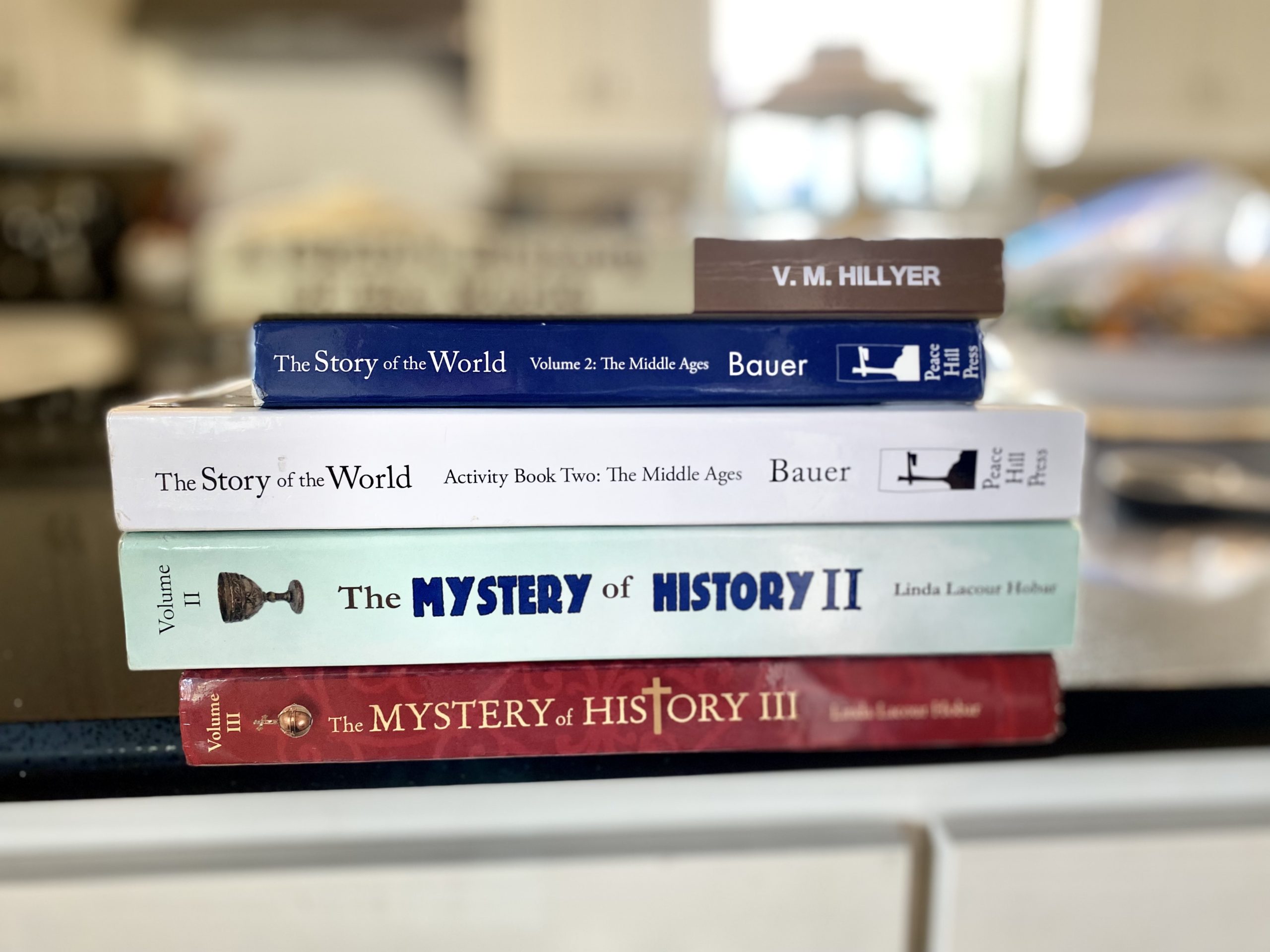
History: Middle Ages – Story of the World volume 2 (Peace Hill Press), Mystery of History volumes 2 and 3 (Linda Hobar), A Child’s History of the World (V.M. Hillyer), plus a large collection of picture books and chapter books and anthologies for living books/literature


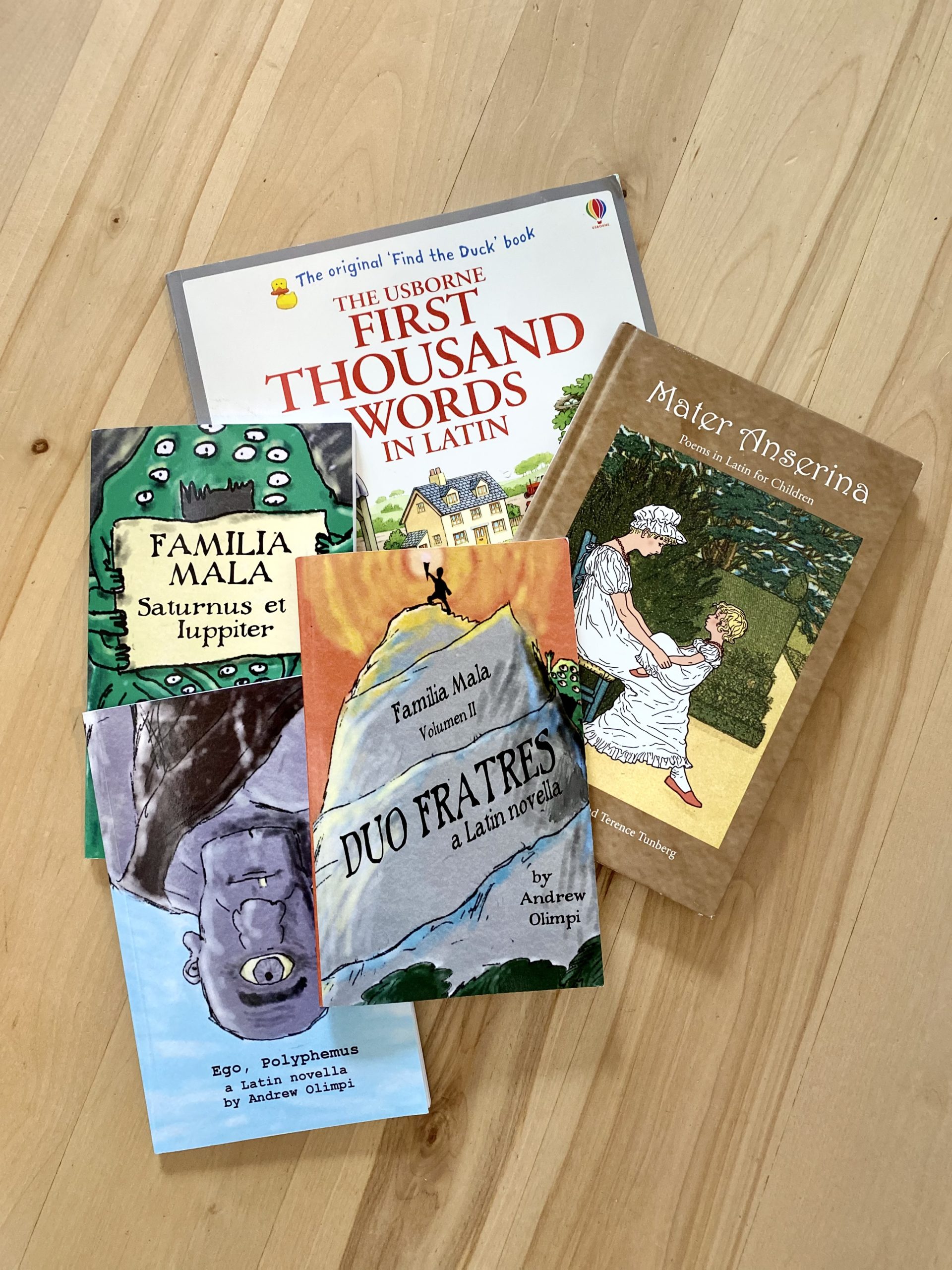
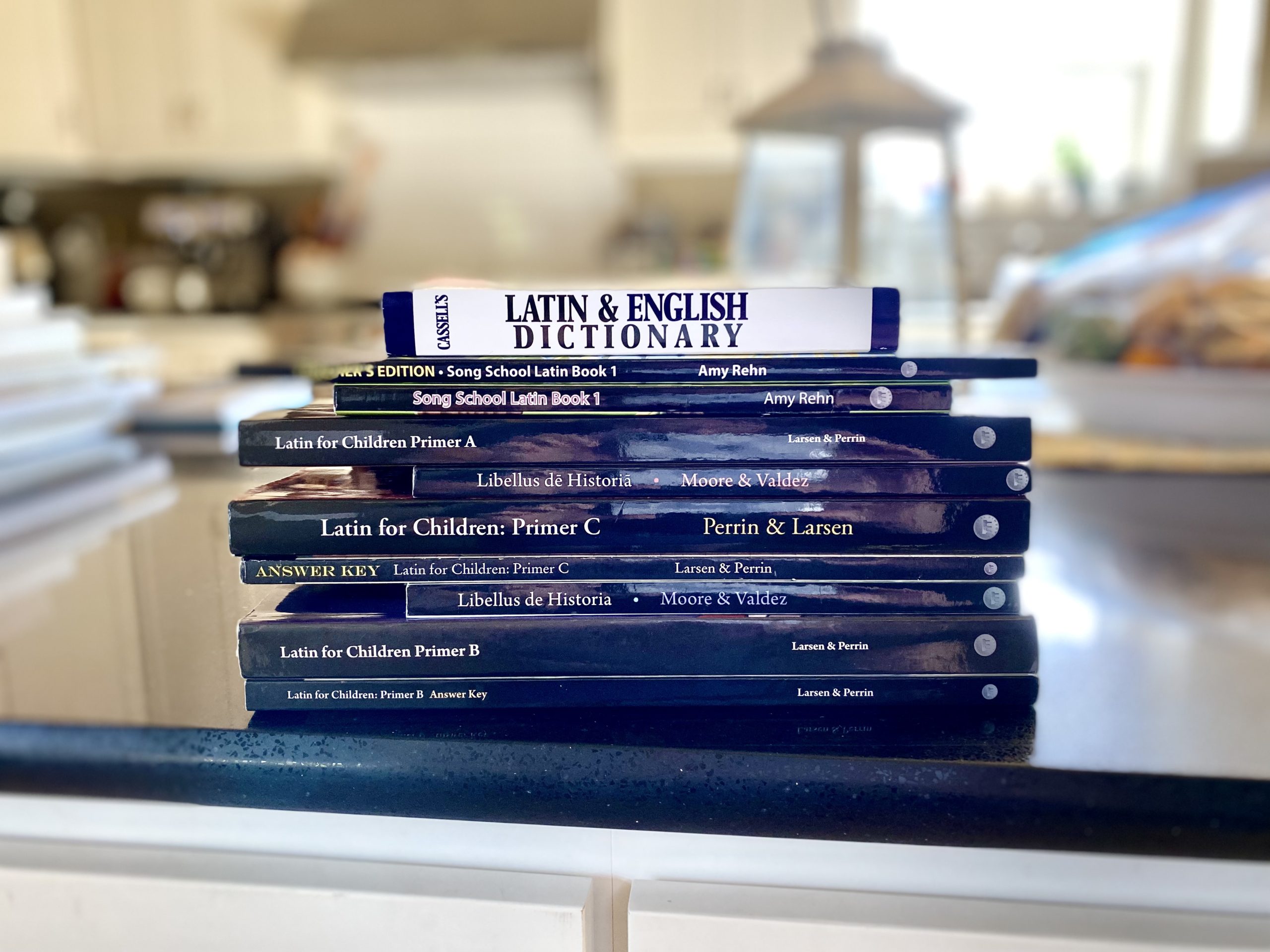
Language: Latin – SongSchool, Primer A, Primer B, Primer C (Classical Academic Press), bilingual dictionary, and a handful of resources containing fairytales and poetry in Latin


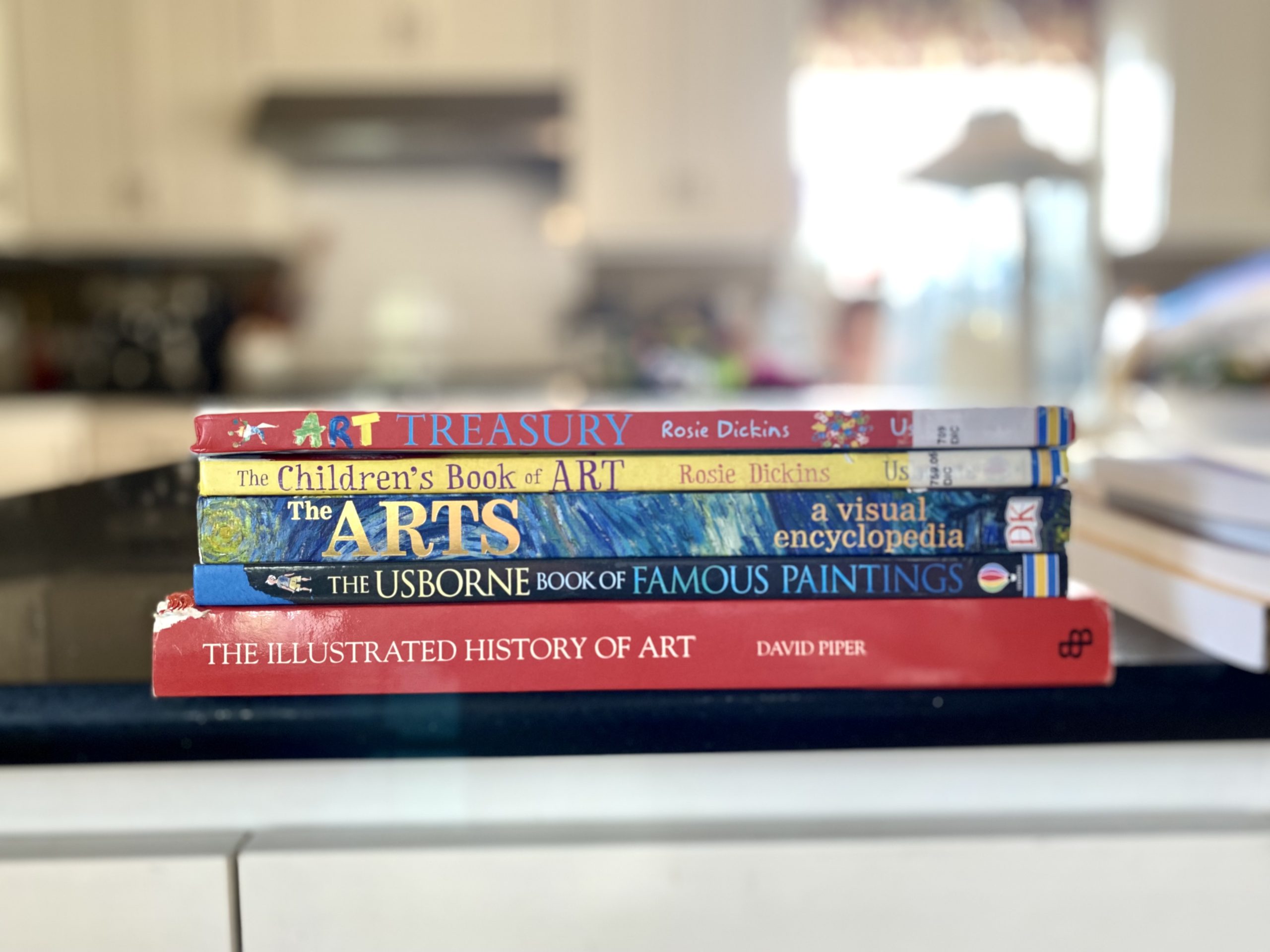
Art: Studies of Imitation through Sketching – Anyone Can Teach Art (Julie Abels), Discovering Great Artists (Bright Ring), Short Lessons in Art History (Walch Publishing), History of Art (Bustard, Veritas Press); plus a bunch of other resources to sprinkle throughout the year – Art Treasury (Rosie Dickins), The Children’s Book of Art (Rosie Dickins), The Arts (DK Publishing), The Usborne Book of Famous Paintings (Usborne), The Illustrated History of Art (David Piper)


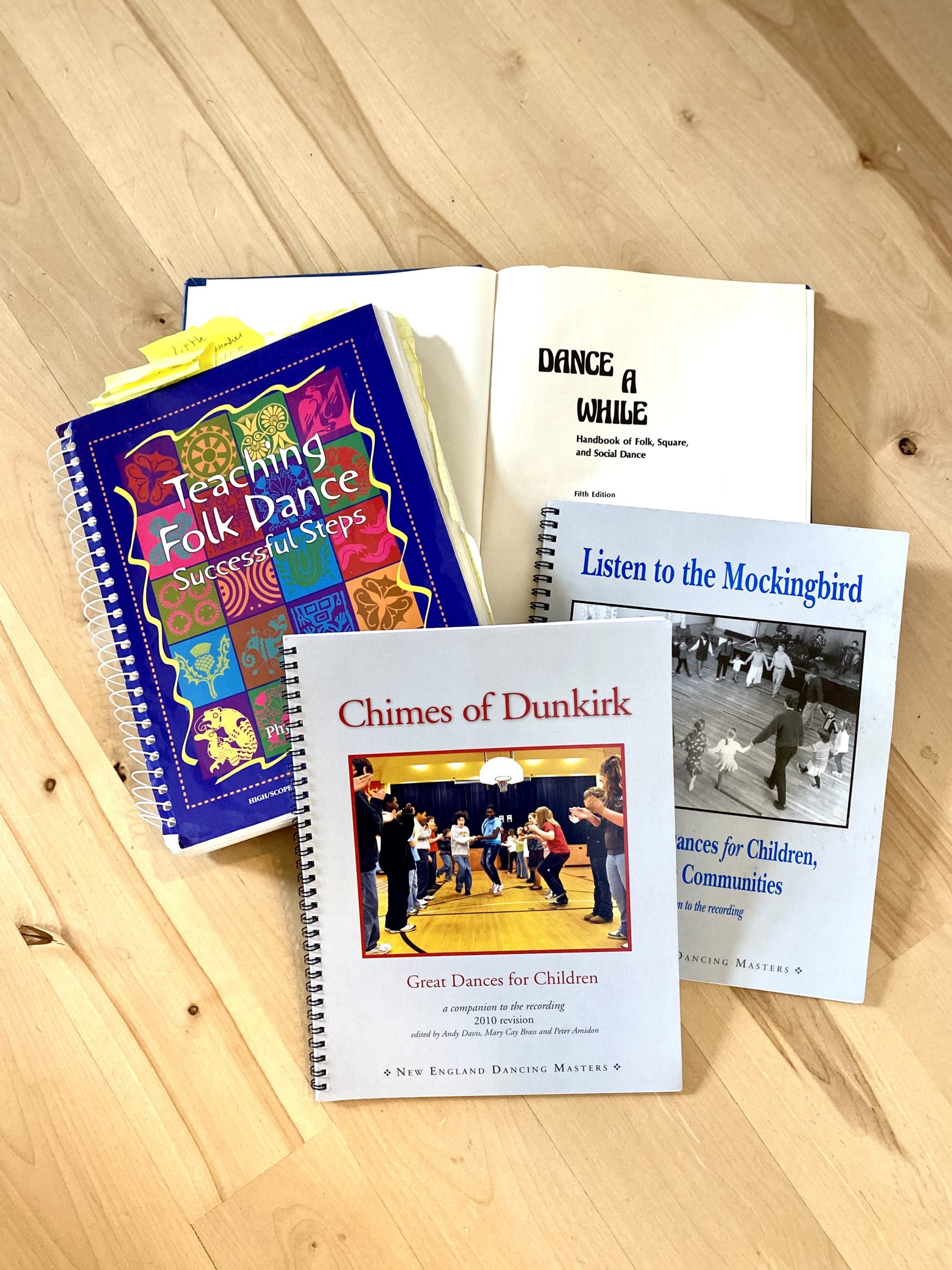
Phys Ed: social dancing – Chimes of Dunkirk (NEDM), Listen to the Mockingbird (NEDM), Teaching Folk Dance (Phyllis Weikart), Dance a While (Waveland Press) and Swedish Drill (Dawn Duran)

I never expected to spend this summer doing this kind of planning and organizing, but the Lord has blessed me so much and given me a lot of joy in it. How kind of Him! And as we have had opportunities through family interviews, co op cookout, and play dates… we are finding a beautiful sense of community already building. Although these ten families have not known each other much previously, there is at least one previously-known family per family. So everyone knows someone, but nobody knows everyone. It can honestly feel a little daunting to jump into a new group of people and an entirely new endeavor together – both for mamas and for kids. But it is beautiful to know that we have unity, regardless of any diversity. (Our pastor recently mentioned in a sermon how uniformity and unity are not the same thing! We don’t strive for uniformity, but unity in Christ.) We are coming together to form a group working toward unified goals: pursuit of God, love of Him, knowledge of Him, wonder of Him for His creation.

We want to train our kids (and ourselves) to love things the Lord loves. Things which are good, true, and beautiful. Things which honor Him and equip us to further His kingdom on earth. That is what will bond us together. That is how we will create friendships and have fellowship in Paideia Studies.

Ordo amoris: ordering our loves. We need to teach our children what is lovely, and then teach them how to love it. This includes various subjects, topics, and books – but it also includes people and families and home cultures. I feel absolutely honored to walk with my children through a new season of education, a new season of community, a new season of friendship. I feel the Lord at work: HE is ordering our loves. May we follow Him with gladness!

Smoke & Prayers

Summertime in the Inland Northwest involves a lot of smoke and a lot of prayer. In fact, yesterday afternoon there was smoke rolling in like I’d never seen before right around the time we were having a few families come over for a time of prayer. Of course, the two things were unconnected at first… but slowly became remarkably entwined.

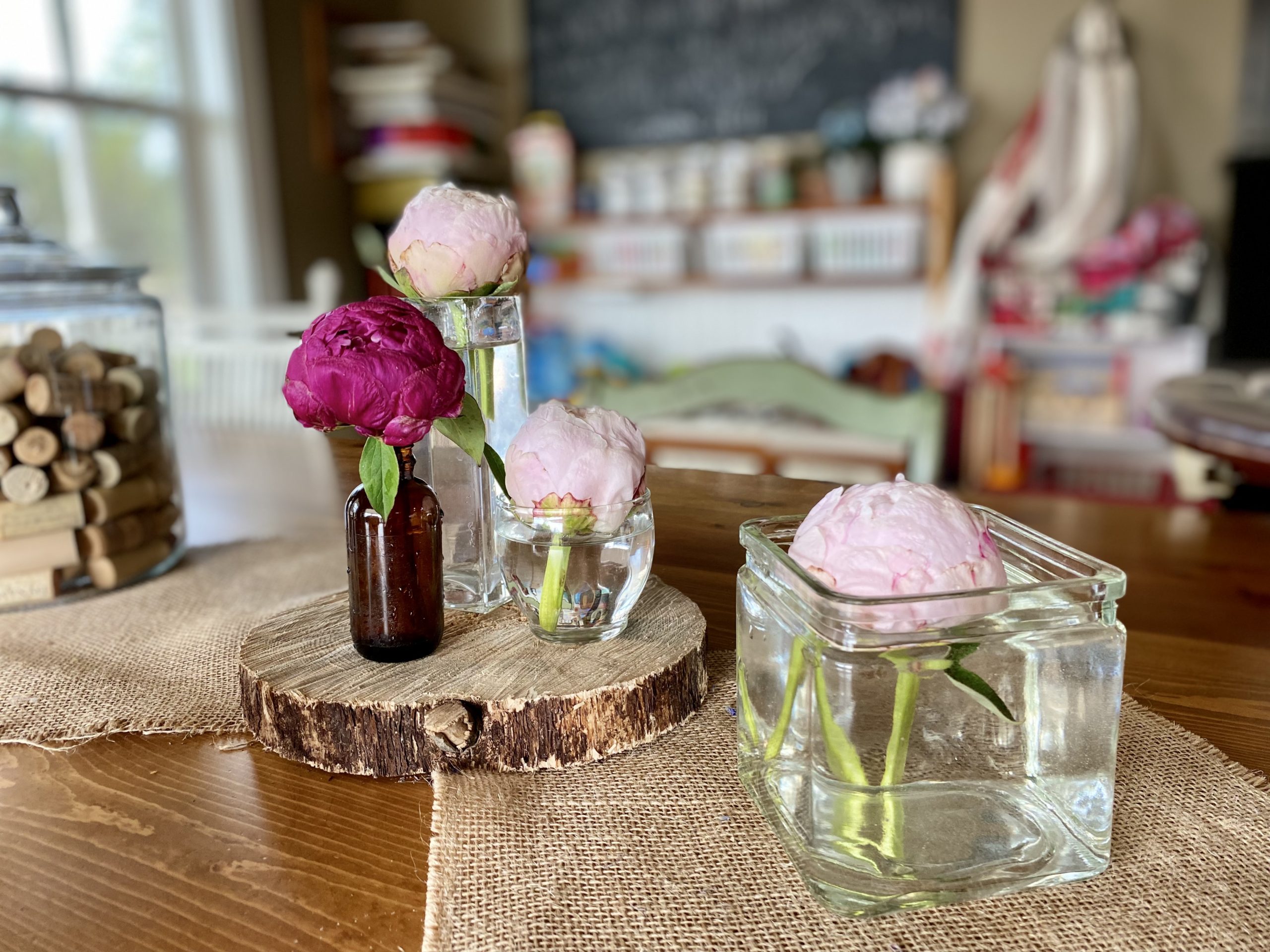
I had spent the afternoon preparing to welcome nine families over, plus our two sets of parents… all together, we were going to have 69 people over for a bbq potluck. While this may sound like no small undertaking, it was not hard to rally my family to mow the grass, set up lawn games and tables, wipe down a few dozen chairs, and tidy up the main area of the house to be as hospitable as we could manage. Our goal was to make our guests feel at home, to feel embraced and welcomed. While we had met each of these families at least once before, most of the people we were having over are new friends: they are the people we will be pursuing education with this coming year in our new homeschool co op. As Director of the co op, I have been spending weeks compiling family info and class schedules, pulling together curriculum in order to prepare lesson plans. I had printed out each mama’s own teaching schedule and supply list, plus a stack of updated data—schedule, directory, and other documents. I had even gathered textbooks and teaching resources to share with mamas who would be able to put my things to good use this year. We had smoked pork butts shredded, watermelon cubed, bags of chips opened, condiments set out with big stacks of paper plates and napkins… we even had dispensers of ice water, lemonade, and iced tea beside towering stacks of classic red Solo cups. And just because I like to add a personal touch whenever I can, I put out centerpieces of sliced wood, burlap squares, and jars of flowers from my garden bed on every table inside & outside.

I guess you could say, I felt ready. Dare I say, I even felt in control.
Being a leader is new to me. I have long loved following. I like being told what to do, so there is no question about whether I am doing the right thing or not. I’m still a recovering people-pleaser, and being in charge of things can make me anxious: what if people don’t like the way I am leading, preparing, or organizing? Well, God has been pushing me to make strides in these areas over the last couple of years, and this summer you could say He shoved me the final distance to close the gap.

But last evening, as we were welcoming a few families into our home for a time of prayer over our homeschooling plans and upcoming co op year, the smoke was rolling in—and it slowly became obvious that I was in control of none of it.

By the time we finished our prayers, we looked up to see more fresh smoke through the windows, and more new friends arriving, bearing armloads of food and furrowed brows.

Then peoples’ phones started shrieking with alarms. Evacuation Level 2 was at play for us, and Level 3 was happening for friends of ours just down the road. The smoke was not blowing in from a far distance as has happened in previous summers—this smoke was from forest & field charring up just down the road in our little farming community.

It felt a little surreal. Steven and I just sort of stared at each other, bewildered or unbelieving or naïve—I’m not sure—while the other adults who were gathering around us in our dining room seemed to all be talking at once. Pack your things, Where are all your important papers, Tell us where to put your photo albums, How can we help, What do you want us to do, We’ve been through this before… Thoughts and questions and experiences were entering my ears in fragments, but I wasn’t really processing any of it. I just looked into the eyes of my husband. Honestly, I felt calm—or maybe numb. I remember sighing and asking, What am I supposed to do? I’m supposed to be hosting and leading. Do I just send my children away with all these friends, and stay here to pack up whatever we can salvage before our home burns down? I wasn’t panicked. But my questions were plain.

Then one of our new friends raised his hand, and we all looked toward him as he said, May I make a suggestion?
I’m pretty sure Steven and I both sighed with relief as this man calmly spoke, commanding the room with his gentle leadership (so Christlike). He looked at me, while all the eyes were turned on him. If I may, I suggest you take your children and go with all the other families and have the potluck somewhere else. Then you let your husband stay here to pack up and do what a husband is supposed to do. He will take care of it, he will pack up what is needed in order to protect and provide. That’s what a husband is supposed to do.

All of a sudden, we had a plan. And a leader.

Most of the parents gathered up all the food and serving supplies, and shepherded children into vehicles. One woman pulled out her iPhone to take pictures and videos of every room (and every bookshelf) in my house, in case we needed such things for insurance claims and repurchasing of items. Another woman walked to all the bedrooms with me, holding a duffel bag and I threw in “two of everything” for each family member. Women kept asking about the pictures on my walls, but in this modern digital age, it was easy to say—I can always print more if I need to. I grabbed one painting, one baptismal gown, and some things from when my babies died. I left everything else. I went outside to make sure my children were prayed with and buckled into the car. Two men stayed with my husband, to remind him to gather banking information, identification papers, business folders, laptops, cash, guns & ammo. My children had been allowed to grab a couple quick things—piggy banks, a favorite doll, a blankie, a book to read.

I kissed my husband before I drove away. While we knew this might end up amounting to little more than a dress rehearsal for a performance that may never open curtains, there was also a sense of heavy reality. Perspective checks are good and healthy. It is a good practice to remember that even the things which feel most precious, and to which we may be fairly attached, are still just things. Even things which have been painstakingly handmade with incredible love are just things. Even if they are technically irreplaceable, they are just things. My children’s eyes welled with tears at the thought of books and musical instruments and bunkbeds and sketchbooks being reduced to char, but they were so obedient and composed and sweet amidst the chaos. Sixty-some people (most of whom they did not know well at all) were rushing around our home and yard, dispersing just as quickly as they had arrived—while smoke billowed in, and the bright sun grew eerie behind the orange-brown haze all around—and my children were being told to leave with only an item or two, perhaps for good.

The Lord was clearly in our midst.

When I pulled into a friend’s driveway ten minutes later, the potluck spread had already been quickly reassembled on a large table, the kids were frolicking and laughing in the yard, and the sixty-some people were now welcomed and embraced by a different hostess. Someone else’s husband asked for God’s blessing on the meal. Someone else had to give directions to the bathroom and repeatedly direct people to the garbage cans. Fellowship happened, bellies were filled, friendships were forged.

And I had almost nothing to do with it.

While I had been planning and prepared to host and lead and act like an adult, what ended up happening was that I was the recipient of some of the most hospitable people I’ve ever met. A friend of mine who was planning to receive hospitality suddenly offered hospitality to this huge group of people. A friend of mine who I barely know yet walked through every room in my house to document all my belongings (in whatever their current state) on her phone. Another friend I barely know helped me pack socks and underwear and toothbrushes, wandering from bedroom to bedroom and bathroom to bathroom in my home—reminding me of the simple task at hand, when it could have felt very complicated.

Later in the evening, my husband and the other men who had stayed with him joined us at the bbq’s new location. We all fellowshipped and feasted until it was almost too dark to see outside anymore. And it was right about that time that phones began to blare again with emergency updates—the fire was being reasonably contained, and we were allowed to return home if we wanted to. We remain in Level 2, but our friends down the road have also been reduced to Level 2—which makes us think the constant hum of helicopters and buzz of airplanes overhead are accomplishing good work. We didn’t sleep much, but we rested in our own beds.

Upon waking this morning, I am decidedly thankful that our home was not directly in the line of fire. In fact, only one home has been lost in the 155 acre blaze. Praise the Lord for His hand of protection over our neighbors! But I am also decidedly thankful for the hospitality roles which were turned on their heads last night. I am thankful that when I felt rather like a follower than an equipped leader—or more of a child than an experienced adult—we had friends ready to fill the gaps and lead us with charity.

Sixty-some people showed up to my home last evening expecting the kindness of hospitality. What they did rather was embrace my family in our own time of need, and showed a unique variety of hospitality to us and one another.

I won’t forget that.
And as fire season has only just started—and a solid month earlier than most years—I will carry with me the lessons they taught me. About what to do and how to serve in moments of crisis. This is Christlike community, and while the smoke & prayers continue to be laid on thick—I am thankful. 

Summer Projects

Perhaps it is simply the nature of time, that the more of it you have experienced, the more you realize its swift progression. The idea of “someday” and “eventually” have taken on a cynical slant for me lately, as I have come to acknowledge that if I don’t pursue something “now” or “soon,” it is likely going to go undone. There is a perspective shift on this that I know continues to progress through the decades, as I think about the classic older-womanly comments that “this too shall pass” and “someday you’ll miss this” and reminder to “enjoy every moment.”

Most of those thoughts apply to the niche of motherhood, of walking my little ones through their education, sanctification, and devotion until they leave our nest to gather their own twigs and build upon our shoulders for the next generation. Some of these thoughts apply to being a middle-generation: of being sandwiched between two faithful women above me (praise the Lord for my mother and grandmother!) and the faith-of-a-child daughter following after me. Some even apply to personal pursuits and projects.

One of my main goals for this summer had been to organize the basement storage area. I had been making good progress on that last year, but then when Olive Tree Bible Software (my husband’s company) went completely remote a couple of months ago, our basement inherited an entirely new category of assets. Let’s just fully admit, then, that any organizational progress I had made was immediately eclipsed. I had intended to spend any spare hours in my summer weeks down in the cool basement, listening to audiobooks, and finding ways to organize and store everything necessary.

But another case of “tyranny of the urgent” arose when I suddenly found myself thrown into the position of creating a homeschool co op from the ground up. I finally have all the groundwork well in-hand for that project, complete with class schedules and book lists: so after hosting a cookout this next weekend for 65+ people in the co op families, I will simply need to complete 31 weeks of lesson plans. Yep: that’s the rest of my summer’s free moments! Good thing I find it enjoyable work.

This is also my fourth year preparing the Paideia Northwest conference for encouraging mamas to raise & educate their children in the nurture and admonition of the Lord. I try to take six months off, and then May through November are my busy months for conference work. Registration for this year’s event should open one month from today, and this means I have to dig in now and finalize a bunch of details. This is all well underway, and I love the endeavor. But it easily eats up time and energy and heart.

Somehow, though, God has given me a few other opportunities for sharing my heart this summer. Besides having had a couple of recent speaking opportunities (with more peeking on the horizon), I have been given the blessing of a couple writing opportunities. In one case, I get to share about my passion of teaching my children to sing, and focus on memorization of Psalms. I can’t wait to share that here! In the meantime, please follow my little hobby on Instagram @SacredPsalmody

But today, I get to share my heart in a community effort put together by my friend Amy Sloan. Amy hosts a podcast called Homeschool Conversations, and writes a blog called Humility & Doxology. For a project with The Curriculum Choice this year, she has been creating a conversation with homeschooling moms from all points on the compass – ages, stages, and styles. To my delight, I was asked to participate in her Second-Generations post, which went live today. It was a joy to share my portion, and this morning I was blessed to read the perspectives of the additional participants.

Seeing God’s faithfulness in my own life is a gift, and something which needs to be forefront as I continue to carry on and build upon the shoulders of my parents. And so my summer projects this year are focused on sharing that faithfulness and harvesting/processing some of that fruit. Rather than organizing the basement, I am writing and speaking and singing and teaching and leading. There may be fewer audiobooks this year than I had hoped, and certainly fewer basement corners classified and curated… but there is just as much fruit. Different fruit. Beautiful and shareable.

Rejoice with me. Come see my disorganized basement if you must! But join me in the conversation of proclaiming the goodness of the Lord. He is on the throne! And as His people, we get to participate in the furthering of His Kingdom. Let’s do this by educating our kids for Him, by spurring one another on toward love and good works, by encouraging daily faithfulness in ourselves and our families, by repenting and forgiving and cultivating an atmosphere of grace. That’s the sum of my summer projects. (Stay tuned for more project reveals!)

How to Make it Happen

What’s the vision?

What is your mission statement?

Whether it is an annual conference (hosting more than 300 women for a day) or a weekly co op (teaching 45 kids every Wednesday), I have found that in order to make it happen, follow through well, and communicate well with others during the process, I need to have a written vision and concise mission statement. It is all about the WHY. When we see the gap we are trying to fill and the need we are seeking to meet, it is easier to follow through with filling the gap and meeting the need. And it can not be done in isolation. In order to delegate, to share the burden, even to bring in prayer partners – I need to have things written down for good communication.

What project is the Lord putting into your hands? And how are you going to move forward with it in order to bring about a harvest of fruitful grace? I would encourage you to keep your Christian worldview front and center, and write your vision in as wordy a way as you can. Don’t leave out details. Once you have brain dumped all the ideas and reasons and hopes for your vision, you can tailor it and trim it in order to create a concise mission statement that will be easier to communicate.

I even do this with my children. Why do we educate at home? Why do it this way? Why music? Why books? Why Collective?

I can have long drawn-out conversations with them filled with run-on sentences and interrupted twenty-seven times with four questions at a time… to share the vision with them. To explain. To bring them into the embrace of that vision. But then when they ask the questions again at a future time, I share a shorter version -more like a mission statement- to sum it up and get right to the point.

So how do you make it happen in your home, in your work, in your pursuits? Where do you write it down? How do you cultivate that vision? And when do you find it helpful to have a specific mission statement?

Gospel Hospitality

I was asked to give a short talk on gospel hospitality last weekend, as about 25 women from our church and community met to discuss the beginning of Rosaria Butterfield’s book, “The Gospel Comes with a Housekey.” I was asked to share a perspective on hospitality which might be different from Rosaria’s experience (or even her evangelistic emphases) – that of showing hospitality within the church family, and specifically mentioning the variety of “one another” directives we are given in Scripture. This was simply the first few minutes of what turned out to be a lively and vibrant discussion where women shared their own experiences of both giving and receiving hospitality, both within and without the Christian family; and we discussed a couple chapters of the book, in addition to clarifying some semantics. We didn’t necessarily agree with some of Rosaria’s definitions or see eye to eye with her on perspectives of prerequisites. But we all agreed that Rosaria’s heartfelt passion for the Gospel and for loving others is just contagious and captivating. I’m so grateful to be part of a local church, and to be building relationships now with people in my own community. And discussing hospitality, sharing with one another about ways we have or could experience this together, was such a blessing.

…..

1 Peter 4:8-10, “Above all, keep loving one another earnestly, since love covers a multitude of sins. Show hospitality to one another without grumbling. As each has received a gift, use it to serve one another, as good stewards of God’s varied grace.”

When Amber asked me to speak a little bit about the aspect of “one another” in the context of hospitality, this verse is what came to my mind. Here in 1 Peter, we are called to do a few different things for one another: to keep loving, to show hospitality, and to serve. These are ways we give our lives for the lives of those around us.

Interestingly, a few years ago at another church, I was asked to research (& then share) some things about “the one anothers” in Scripture. (I posted a prayer here that came from that study as well.) One of the main things I came away with from that short study was the simple reminder that I am called to give up myself for others, I am to imitate Christ my Lord in sacrifices big and small. The pastor who baptized me a couple decades ago uses the phrase, “my life for yours.” That is what Christ did for us, and it is what we as His people are called to do for the others around us. Romans 12:13 says that we are to “contribute to the needs of the saints and seek to show hospitality.” These are some of the marks of a true Christian: meeting needs and showing hospitality.

Hospitality, in its many and varied forms, is an active living-out of “my life for yours.” I will give of myself in order to give life to you. I will share my home to give you shelter, I will share my food to give you nourishment, I will share my belongings to ease your needs, I will share my shoulders to help bear your burdens, I will share my faith to bolster yours.

We have been shown the most sacred and awesome hospitality of all by being sinners saved by grace, for while we were yet sinners, God called us to become part of His family (Ephesians 2:5-8). He is preparing a home in heaven for us (John 14:2). And while we anticipate the blessing of the home He is preparing for us, Ephesians 2:10 says that we were “created in Christ Jesus for good works, which God prepared beforehand for us to walk in.”

At the same time, we need to be discerning and wise in how we share our homes and resources—in how we express godly hospitality—which is undoubtedly a good work prepared for us by our hospitable God. In the epistles of John, we read about false teachers and wolves in sheep’s clothing. In 2 John we read of the danger and warnings against opening one’s home to destroyers of the faith. There is a hospitality which is an act of charity, mercy, and compassion regardless of the spiritual state of the recipient (which is what Rosaria is emphasizing throughout The Gospel Comes with a Housekey), but we are called in Matthew 10:16 to be wise as serpents and innocent as doves. The exhortation for wisdom and innocence there is Jesus warning His people to be watchful for the enemy. So we must temper our merciful hospitality with much godly wisdom.
1 Corinthians 15:33 says that bad company corrupts good morals, which is generally understood to mean that it is incredibly difficult to withstand secular, godless company—this is why Paul encourages us strongly to put on the full armor of God. When we pursue hospitality to those outside the fold of Christ, we ought to be particularly well-armed, and we ought to shelter our especially vulnerable sheep (our children) well.

2 John 1:6-11, “And this is love, that we walk according to His commandments; this is the commandment, just as you have heard from the beginning, so that you should walk in it. For many deceivers have gone out into the world, those who do not confess the coming of Jesus Christ in the flesh. Such a one is the deceiver and the antichrist. Watch yourselves, so that you may not lose what we have worked for, but may win a full reward. Everyone who goes on ahead and does not abide in the teaching of Christ, does not have God. Whoever abides in the teaching has both the Father and the Son. If anyone comes to you and does not bring this teaching, do not receive him into your house or give him any greeting, for whoever greets him takes part in his wicked works.”

That’s kind of heavy stuff. And of course we use Scripture to interpret Scripture, and can not take this portion out of context. But I think it is prudent to point out here that God is urging us toward wisdom in regard to who we spend time with on the largescale, and who we greet and receive into our homes. Rosaria was brought to the Gospel through the hospitality of a couple—and it was in the context of intellectual banter and spiritual warfare. The people who welcomed her into their home and gave her a place at their table were prepared and equipped and armored. This is how we too ought to pursue hospitality toward the unsaved. Be hospitable, but do it after girding up your loins for battle.

But how about showing hospitality toward Christ’s flock? The people in your own church body, sitting in the front row, or down the pew from you. What about your pastor’s family? What about other people who serve in the worship service? What of giving your life (your home, your time, your table) for them? Romans 12:13 exhorts us to contribute to the needs of the saints, and show hospitality. Paul also says in Galatians 6:10 that we are to “do good to all men, but especially to those who are of the household of faith.” We ought to be particularly spurring one another on toward love and good works and hospitality within Christ’s family. Jesus Himself shows us by example in Matthew 12 that the people of God, “whoever does the will of My Father in heaven” are His brother and sister and mother.

I don’t think you can go away from Rosaria Butterfield’s book without feeling the weightiness and validity of her argument that sharing the gospel through hospitality is an incredible witness of grace and act of love. But if we don’t start closer to home, I think we do ourselves, our families, our church families, and our communities (including the unchurched and unsaved) a disservice.

My mom was taught the gift of familial hospitality through my grandma’s hospitality. Growing up, we had Sunday night family dinner—five generations of us—at my grandparents’ house every week. It was a glorious blessing. There were believers and unbelievers gathered around that table—every single one of us, sinners. Regular hospitality to multiple generations of family members (and the occasional friends that got brought along with us to the table) was exemplified, and my mom and I both learned from that example. My grandma hospitably welcomed her parents and her grandma to live with them. My mom later hospitably welcomed her grandfather, and later her inlaws to live with us. And when she was unable to have her own parents live closeby, she took hospitality one thousand miles distance, flying on a plane to visit them multiple times a year to love them, care for them, minister to them. My grandma still enjoys the harvest of fruit in my mom’s hospitality, and it is one of my mother’s main endeavors right now: to honor her mother, and a lot of it through various forms of loving hospitality. My mom learned something else from my other grandmother: she learned community hospitality from her mother-in-law, learning how to do things like host potlucks for their square dancing clubs and welcome large community groups into her home—like my dad, I’ve heard that my Grandmother Bennett “never knew a stranger.” She loved and welcomed everybody, and my mom learned community hospitality that way. My mom made home cooked meals for my dad’s entire staff luncheon every single Wednesday. That was a unique form of hospitality—she never made the same thing twice. And she blessed his staff so much through her food that she ended up making little cookbooks for them as gifts at Christmastime so they could then show culinary creativity as hospitality as well. She also threw amazing parties throughout my childhood for any random holiday or occasion you can imagine. But it was Sabbath meals, a midday dinner after Sunday morning worship service, where she would regularly gather twenty or more people around one table and serve a feast—it was that kind of church family hospitality that she really loves, and which I gratefully learned from her & now love to also pursue. Neither my mother nor my grandmothers had big block parties every summer or invited all the neighbors into their portico every Sunday afternoon like Rosaria writes about. But they all had unique talents given to them by God, and joyfully served the people God gave them through the sacrifice and service of hospitality.

I have the blessing now of having my own home, and I get to extend hospitality. And I am so grateful that I have the legacies of my mother and grandmothers to build upon. I love that we have a dedicated guest room so that our long-distance relatives always have a place to be welcomed whenever they want—and when they are not here, the bed is always made and the towels are always clean, because I want it to be a ready place of welcome if there is ever a need brought to my attention. It doesn’t happen very often, but it is there. And that is important—we are seeking how to be ready to show hospitality when the need arises.
I love to host extended family for Saturday evening Advent feasts throughout the month of December. I love to host church families for Sunday afternoon soup & bread throughout the month of December as well. We built our house with an open floor plan so we could fill it with guests, and laid ten thousand square feet of sod for a yard so we could welcome families to fill it up and play hard.

Someday, I might even be able to invite all the neighbors on my street to an ice cream social—I hope so. But right now, I am practicing my hospitality in ways a little closer to home. Especially while my children are young and vulnerable, I purposely keep our sphere small. I choose carefully what people come into my home and around my little ones. Their armor is on, but it isn’t as stalwart yet as it will become. My first ministry, and my most important hospitality, is shown to my closest neighbors—who happen to live right in my home.

So as someone who is living a very different life from Rosaria Butterfield’s story, but as someone who passionately embraces the theology & importance of hospitality like she does, I wanted to just share some brief ideas of how we can specifically bless one another in the household of faith.

When someone is ill, recovering from childbirth or illness or a procedure, drop off a meal. It doesn’t have to be fancy or complicated—it needs to nourish the body and the soul. This shows a welcoming love for one another.

When someone is rejoicing or grieving or needing a bit of encouragement, pick a bouquet of flowers (or grab a small bunch at the grocery store), and leave it on someone’s doorstep. This shows a welcoming love for one another.

When you are cooking something freezable—lasagna, enchiladas, chili, meatloaf—make an extra pan or two in disposable bakeware so you always have something on hand in the freezer to give away when a need arises. This shows a welcoming love for one another.

When you know it’s going to be over one hundred degrees for a week, and you have air conditioning or a creek or lakefront property or a really great set of sprinklers, invite people over to cool off. Put a package of OtterPops in the freezer so you can cool people off from the inside out. This shows a welcoming love for one another.

Take someone out for coffee. Treat a lonely friend to breakfast. Share a cup of tea with a widow. Invite a college student over for Thanksgiving. Deliver fresh bread and honey butter to the neighbors “just because.” Text a friend from Costco to see if she needs anything picked up while you’re already there. Have an open house lawn party—set up lawn games, roast some marshmallows, make a huge bowl of popcorn, and pour countless glasses of Country Time lemonade. These are all ways to show welcoming love for one another.

Sometimes hospitality looks different than we imagine it would. Or could. Or should. But we don’t all have the same gifts—we don’t have the same personalities, resources, skills, or even spheres of influence. But we are all called to contribute to the needs of the saints and to pursue hospitality. Ask the Lord to show you what needs are throbbing in the saints around you. Ask Him to help you pursue hospitality among the household of faith. Ask for His provision so that when you bring your small basket of loaves and fish, it would be His love which multiplies your offering so that all who gather around your table will be nourished and sent away full. With leftovers. Because He is that kind of God. And we ought to be that kind of people.

Throughout Scripture, we are called to LOVE one another, to SHOW KINDNESS to one another, to SPEAK THE TRUTH to one another, to HONOR one another, NOT TO WRONG one another, to BEAR THE BURDENS of one another, WEEP with one another, ENCOURAGE one another, EXHORT one another, GREET one another, HAVE FELLOWSHIP with one another, WAIT for one another, BE AT PEACE with one another, SING to one another, USE GIFTS for one another, SERVE one another, CONFESS SINS to one another, FORGIVE one another, PRAY FOR/WITH one another, and WELCOME one another with hospitality.

So as we continue our discussion and see how Rosaria uses her own giftings and resources to share the gospel with people in a welcoming way, let us not forget to start where we are—to treat one another with welcome and hospitality in creative, generous, joyful ways. Starting with the people in your own home, then your own church, and then beyond that to your community. 1 Peter 4:9-11 says, “Show hospitality to one another without grumbling. As each has received a gift, use it to serve one another, as stewards of God’s varied grace… in order that in everything God may be glorified through Jesus Christ. To Him belong glory and dominion forever and ever. Amen.”

Paideia Studies Books

As I continue reading about Classical education, specifically capitalizing on the Christian nuances of it, and prepare to direct a cooperative of families in this endeavor, I want to say a few things about books & curriculum. If you have been around me, my home, my conferences, or my writing for any length of time you will know at least one thing about me: I love books. Bibliophile ought to have been my middle name. But Joy also works, because I get more joy out of books than you can probably imagine. Buying them, holding them, smelling them, flipping through them, reading them to myself, reading them to my children, reading them alongside others, discussing them, writing in them, book darting them, assessing them, organizing them, gifting them, lending them, borrowing them, recommending them… the list goes on and on… but it’s all about books. Seriously. I have an addiction. (There are way worse things to which I could be addicted, so I’m unabashed and unashamed.)

But one thing about homeschooling is that it feeds this book addiction. I suppose you can homeschool without being a bibliophile, but why?! Through my years of home education (being a second generation in this realm, I have thirty-two years of this going for me at this point… or maybe thirty-seven…), my love of books has grown exponentially. So has my need for more bookshelves. And as I have grown in my pursuit of Classical education specifically, my needs (not just my desires) for more books has become more pronounced.

If you can imagine this being even more emphasized, just imagine now that I have been put in the position of starting and directing a Classical Christian homeschool co op. Yep! Loads of more books. In fact, the kids probably have begun to equate the mailman with a librarian… because more often than not, at least one book arrives on the doorstep a day.

I mean, hey: I already admitted that I have an addiction.
Addictions can be healthy. (Right?)

Back to books.

I love to jog along the line of Charlotte Mason meets Classical education. When I first read “Consider This” by Karen Glass, I think I actually cried, legitimately dimpling the pages of that library book with more happy tears than book darts (and trust me, there were plenty of book darts). I was not raised to check off boxes or fit into boxes. I was honestly raised to move mountains, ask questions, push the envelope, rest deeply, and create culture rather than fit into one. We never liked labels. I still don’t like labels. (Don’t believe me? Ask my husband. Or my pediatrician.)

So when it comes to curriculum, I have never really loved answering the question that most often peppers me as a homeschooling mama: “so, what curriculum do you use?” It makes me stutter and stumble almost as obviously as when someone would ask me as a homeschooled kid, “so, what grade are you in?”

I don’t exactly use a curriculum. I mean, I do. But I pick and choose. I like to think of our educational feast as a buffet, and we eat what is needed and loved at the time. We have always done Saxon math… but honestly, only because that’s what my parents used for my brother & me, and it worked for us… and thus far, it has worked for each of our kids as well (we are only up to Algebra 1). We have enjoyed Rod & Staff for grammar, Our Mother Tongue, and even Dragon Grammar. We have enjoyed IEW as well as Writing & Rhetoric. I love weaving together Story of the World with A Child’s History of the World and Mystery of History. Mapping the World with Art is my absolute favorite geography curriculum at this point. And we have used a few different Latin resources from Classical Academic Press. We buy things from Veritas Press, Memoria Press, and Logos at Canon Press as well. (But let’s be honest: I buy as much as I can from used vendors on Amazon, Thriftbooks, Abebooks, or Exodus Books.)

I constantly have over one hundred books checked out from the library (four family members have cards, and each has a 50-book allowance at a time), most along themes of what we are currently studying or pursuing as a family or in our homeschool co op. And the living books emphases from the Charlotte Mason world? Oh yes please. All of those are speaking my love language! I love to pull things from Ambleside Online. I also use Redeemed Reader to help us wade through a lot of things that are newer (I used to use a lot of Read Aloud Revival as well, but my kids & I have sort of grown past that and find Redeemed Reader and Scholé Sisters to be a better niche for us at this point).

But when it comes to a homeschool co op, we do need to have things chosen ahead of time, and a trajectory to share with the group so that all the families are quite literally on the same page.I have had some people asking about the curriculum that Paideia Studies will be using, so I thought I would just share a bit of that here. Not all of this is set in stone yet, but this is the current plan and trajectory of ’21-’22. Seeing it all written out and hyperlinked helps orient you to the vision as well as the specific curriculum, I think. I’m encouraging all co op moms/parents to read the first essay in a previously mentioned book called The Paideia of God, which you can read online right here.I am also encouraging all co op moms/parents to pick up this short book, Classical Education and the Homeschool… it is a great resource for getting a little jumpstart on this whole idea. Paideia for the parents is important too! Parents need to model continuing education and love of learning, in order to best teach and encourage our kids toward knowledge, instruction, and wisdom.

So without further ado, this is in the plan for ’21-’22:

SCIENCE- Apologia General Science (textbook for older kids, but just following the modules in the table of contents each week for the younger kids, in more of a Charlotte Mason living books method)

LATIN- Songschool Latin (younger kids) or Latin for Children Primer A (older kids) as well as Root Words (Greek and Latin – curriculum not yet published)

HISTORY- Story of the World, Volume 2 – Middle Ages History (all ages)A Child’s History of the World (optional, but recommended)Mystery of History, Vol. 2 and 3 (optional, but recommended)

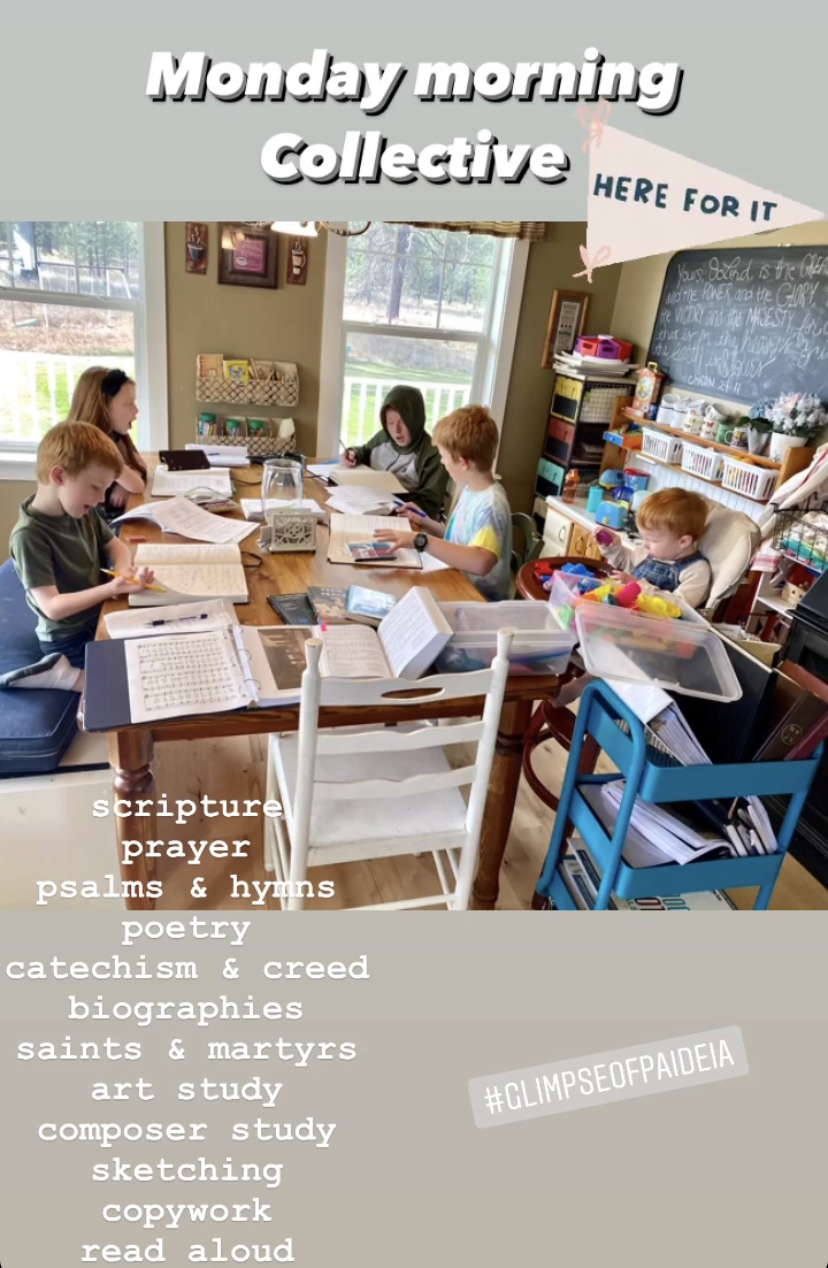
COLLECTIVE- We will also be doing singing, poetry, Bible/devotional, catechism (probably New City Catechism), and rotating through composer/poet/scientist/saint study in an all-together Collective each week for the first hour of co op.

ELECTIVE- And for the final hour of each co op day, we hope to have a rotating class that is more extra-curricular, possibly in eight week sections. We will figure that part out once we know for sure which families are joining us, how many kids will be in each class, and what the skills/interests are of all the attending parents. We will likely begin with art history & imitation.

I am eager to share more details of these class plans and book lists as time goes on. It is good for me to document these things, to have a self-motivated accountability on co op planning, and to share with other similarly-minded mamas so we can sharpen iron together.

Also, if you need to borrow a book… just let me know. I’ve recently turned my jokes from, “there’s an app for that,” to a more personally applicable, “I’ve got a book for that.”

See? Bibliophile. Unashamedly.